
The best fafda recipe gujarati crispy style usually comes down to three things people underestimate in U.S. kitchens: hydration control, resting time, and frying temperature that stays steady.
If you have ever made fafda that turned chewy, blistered unevenly, or soaked up oil, it is rarely because you “missed a secret ingredient.” More often, it is small process details, like how you add water, how long you let the dough relax, or whether your oil drops too cold after the first batch.
This guide keeps it practical: you will get a reliable crispy Gujarati fafda method, a quick troubleshooting table, and a few realistic swaps for ingredients you can actually find in American grocery stores.
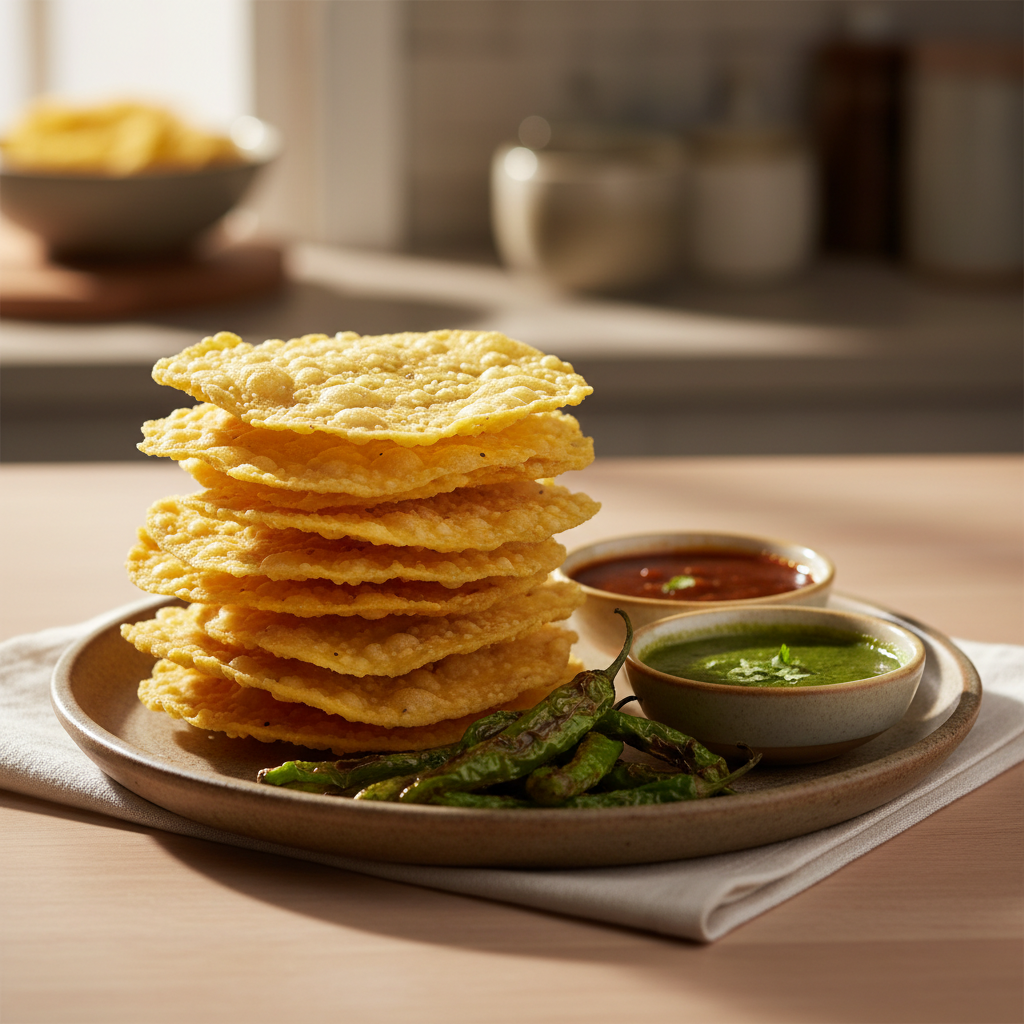
What makes Gujarati fafda truly crispy
Crispy fafda is not just “fried gram flour.” The texture comes from a dough that is firm but workable, then rolled thin, then fried in oil that stays hot enough to dehydrate the surface quickly without burning the spices.
- Low-to-moderate hydration: too much water makes steam pockets and softness later.
- Proper dough relaxation: resting helps you roll thin without tearing, which improves crunch.
- Correct fat management: a little oil in the dough helps short, flaky bite, but excess makes it heavy.
- Stable frying temperature: cold oil equals oily fafda, overheated oil equals bitter notes.
According to USDA Food Safety and Inspection Service (FSIS), safe cooking guidance often emphasizes temperature control as a core kitchen safety habit, and that mindset applies here too: keeping oil in a controlled range helps both texture and safety.
Ingredients you need (and smart U.S. substitutions)
You can keep this close to the Gujarati classic, but you do not need to overthink specialty items. If you have an Indian grocery nearby, use it, otherwise these substitutions usually work.
Core ingredients
- Besan (gram flour/chickpea flour): 2 cups
- Ajwain (carom seeds): 1 to 1 1/2 tsp
- Turmeric: 1/4 tsp
- Red chili powder: 1/2 to 1 tsp, to taste
- Salt: about 1 tsp (adjust)
- Oil: 2 tbsp in dough + enough for frying
- Water: added gradually, usually 1/2 to 3/4 cup total
- Baking soda: a small pinch, optional (too much turns it soapy)
Substitutions that usually behave well
- If you cannot find ajwain, try crushed fennel + a tiny pinch of celery seed, not identical but similar vibe.
- If your chickpea flour is very fine and “silky,” crispiness may drop a bit, mix in 1–2 tbsp semolina for extra snap.
- Neutral frying oils in the U.S. that work: peanut, canola, safflower, sunflower.
Step-by-step: best fafda recipe gujarati crispy method
This is the workflow that most often produces thin, crunchy strips without turning your kitchen into a stress test. Read once, then cook.
1) Mix the dry base
In a wide bowl, whisk besan, ajwain, turmeric, chili powder, and salt. Rub the 2 tbsp oil into the flour with your fingertips until the mix looks slightly sandy and holds a light clump when pressed.
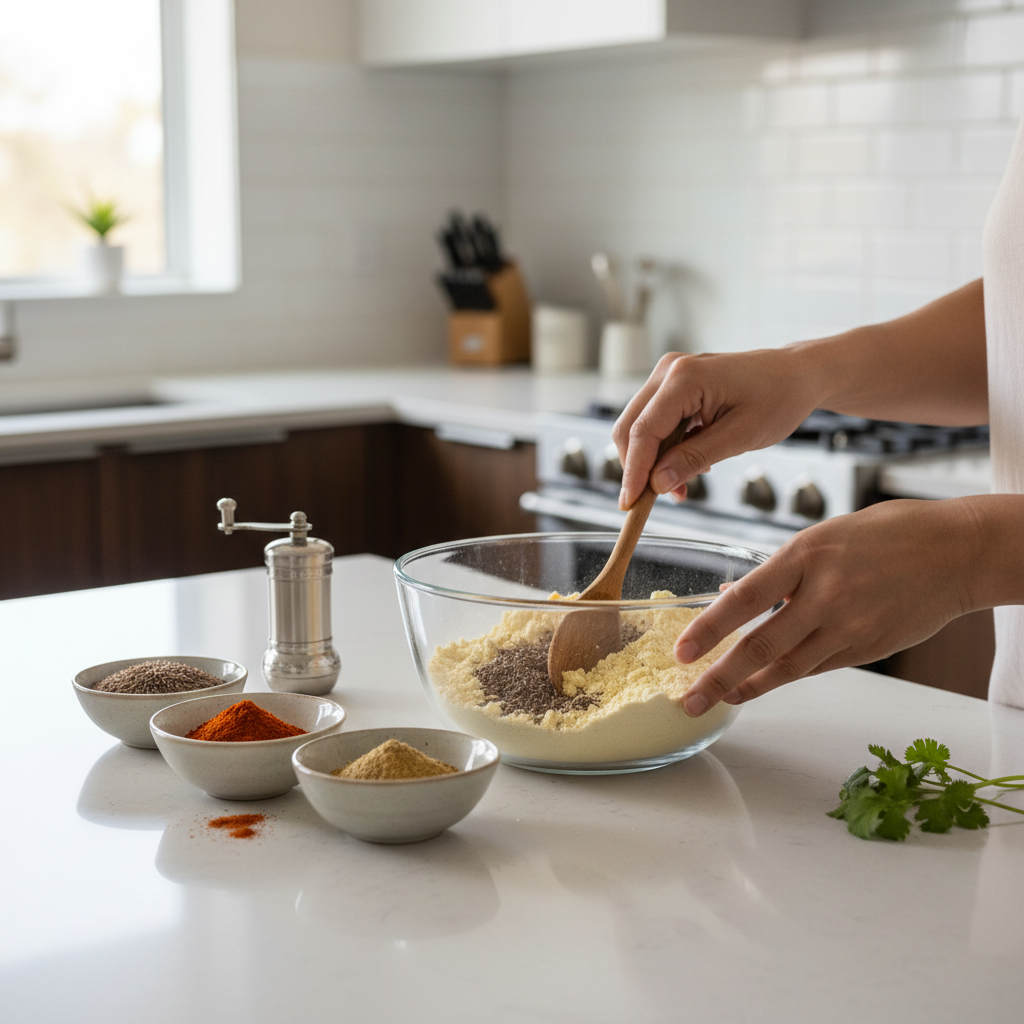
2) Add water slowly, aim for a firm dough
Add water a little at a time and knead. You want a dough that feels firm, smooth, and not sticky. If it feels soft like chapati dough, it is too wet for crispy fafda.
- Texture cue: when you press a finger in, the dent should bounce back slowly.
- Stickiness: your hands should come away mostly clean.
3) Rest, then knead briefly again
Cover and rest 15–20 minutes. This rest makes rolling easier and reduces tearing. After resting, knead for 30 seconds to smooth it out.
4) Shape and roll thin
Divide into 8–10 portions. Keep unused dough covered. Roll each portion into a thin strip, then press and stretch with your palm. If you know the traditional technique of pressing with the heel of your hand, do that, but do not fight the dough. If it keeps snapping back, give it 5 more minutes of rest.
5) Fry in steady, medium-hot oil
Heat oil in a deep pan. Many home cooks do well around 350–365°F. If you do not have a thermometer, drop a tiny dough bit in: it should rise in a second and bubble steadily, not violently.
- Slide 1–2 strips in, do not overcrowd.
- Fry until pale golden with crisp edges, flipping once.
- Drain on a rack if possible, paper towels work but can trap steam.
According to FDA consumer guidance on kitchen safety, hot oil can cause severe burns, so keep children away, use a stable pot, and avoid adding wet dough pieces that can splatter.
Quick self-check: are you set up for crisp fafda?
If you want the best fafda recipe gujarati crispy results, this short checklist catches most of the “why did mine fail” moments before you waste oil.
- Your flour: besan smells fresh and nutty, not bitter or stale.
- Your dough: firm, not tacky, holds shape when rolled.
- Your thickness: thin enough that light passes slightly at the edge.
- Your oil: reheats between batches, no crowding.
- Your draining: airflow under the fafda, not piled hot.
Troubleshooting table (what went wrong and how to fix it)
| Problem | Likely cause | Fix next batch |
|---|---|---|
| Soft or chewy after cooling | Dough too wet or oil too cool | Add water more slowly, fry at steadier medium-hot temp, drain on rack |
| Too oily | Oil temperature drops from crowding | Fry fewer pieces at once, wait for oil to recover heat |
| Bitter or dark too fast | Oil too hot, spices scorching | Lower heat, use thermometer, avoid old oil |
| Cracks while rolling | Dough too dry or not rested | Rest longer, add 1–2 tsp water and knead in |
| Uneven bubbles, warped shape | Thickness inconsistent | Roll more evenly, keep strips similar width |
Serving, storage, and make-ahead tips (so it stays crunchy)
Fafda tastes best within a few hours, but you can stretch the crunch if you handle steam and storage correctly.
- Serve with: fried green chiles, dry papaya sambharo, or sweet-and-spicy chutney.
- Cool fully: store only after it reaches room temp, trapped heat softens it.
- Container: a tin or a box lined with paper works, avoid airtight plastic when still warm.
- Re-crisp: 300°F oven for 4–6 minutes, then cool 5 minutes before closing the lid.
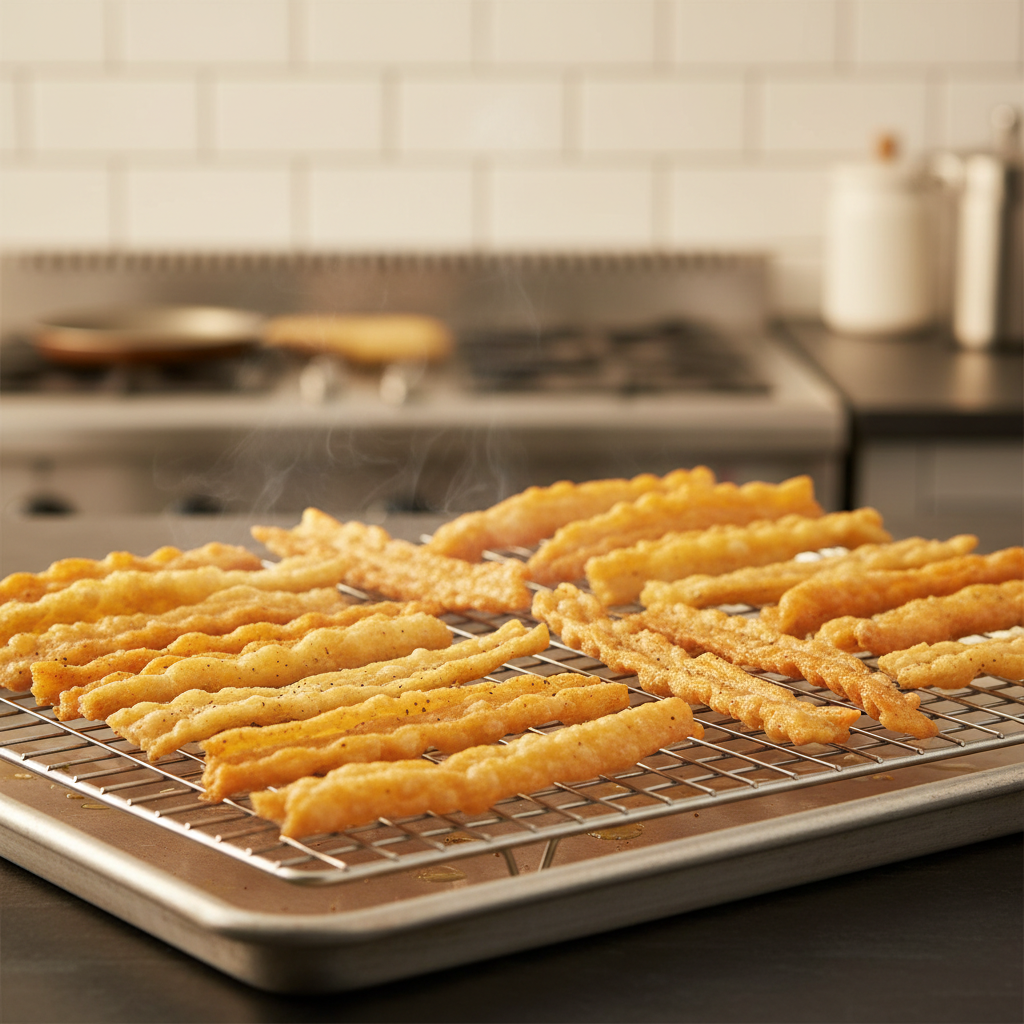
Practical variations (spice levels, baked option, and dietary notes)
People search for “crispy” and end up making the recipe too complicated. Keep the base method steady, then change only one thing at a time.
Spice control for U.S. palates
- Mild: 1/2 tsp chili powder, add a pinch of paprika for color.
- Medium: 1 tsp chili powder, keep ajwain at 1 tsp.
- Hot: add a pinch of cayenne, but avoid overdoing it because bitterness shows more after frying.
“Baked fafda” expectations
You can bake or air-fry rolled strips, but the result is usually more like a crisp cracker than classic fafda. If you cook for someone who needs reduced fried foods, it may still be a reasonable compromise, and it is worth discussing dietary needs with a qualified professional when health conditions are involved.
Gluten-free
Traditional fafda is typically gluten-free because besan has no gluten, but cross-contamination can happen depending on your flour brand and kitchen setup, so check labels if that matters for your household.
Key takeaways (read this before you start frying)
- Firm dough beats soft dough for crisp texture.
- Resting is not optional if your dough fights you while rolling.
- Temperature stability matters more than “how long” you fry.
- Drain with airflow, steam is the quiet crunch killer.
Conclusion: how to get consistent, crispy fafda at home
If you want the best fafda recipe gujarati crispy results, treat it like a simple process recipe: firm dough, short rest, thin strips, medium-hot oil, and proper cooling. Once you hit those cues, the rest becomes preference, spice level, shape, and what you serve on the side.
Make one batch with a thermometer if you can, take notes on the dough feel, then adjust water by tablespoons next time. That small discipline is what turns fafda from “sometimes great” into “reliably crispy.”