
peruvian ceviche easy sounds like a quick win, until your fish turns chalky, your lime tastes bitter, or you start wondering if it’s even safe to serve raw seafood at home.
The good news is ceviche is less “mystery technique” and more “timing + temperature + the right cut.” Once you know what to buy and when to mix it, you can get that clean, bright Peruvian flavor without overcomplicating dinner.
This guide keeps it practical: what fish works in the U.S., how long to marinate for the texture you want, a simple leche de tigre you can repeat, and a few realistic substitutions when you can’t find Peruvian ingredients.
What makes Peruvian ceviche taste “right” (and why many versions miss)
Peruvian-style ceviche is typically sharper and cleaner than versions that sit in citrus for hours. The goal is fish that stays tender, not “cooked-through,” plus a punchy citrus broth known as leche de tigre (tiger’s milk).
Where home attempts go sideways usually comes down to three things:
- Fish quality and cut: soft fish or thin slices break down fast and go mushy.
- Over-marinating: citrus keeps denaturing proteins, so texture keeps changing.
- Warm mixing bowl: ceviche warms up quickly on the counter, which affects both texture and food safety.
According to the U.S. Food & Drug Administration (FDA), raw or undercooked seafood can increase foodborne illness risk for some people, so it’s smart to be picky about sourcing and to keep everything cold.
Quick self-check: is this a good day to make ceviche?
Before you commit, run through this list. It saves you from trying to “fix” ceviche after it’s already gone watery.
- You can buy very fresh, firm fish from a trusted market, and it smells clean, not “fishy.”
- You have enough limes for fresh juice, bottled lime tends to taste flat and can skew bitter.
- You can keep it cold with a chilled bowl or a bowl set over ice.
- Your guests are a fit for raw seafood: pregnant people, young kids, older adults, and immunocompromised guests may need a cooked alternative, and a clinician can give personalized guidance.
If two or more items feel shaky, consider doing a “cooked ceviche” variation with shrimp or quickly poached fish. You still get the flavor profile, just with less risk.
Ingredients you actually need (with realistic U.S. swaps)
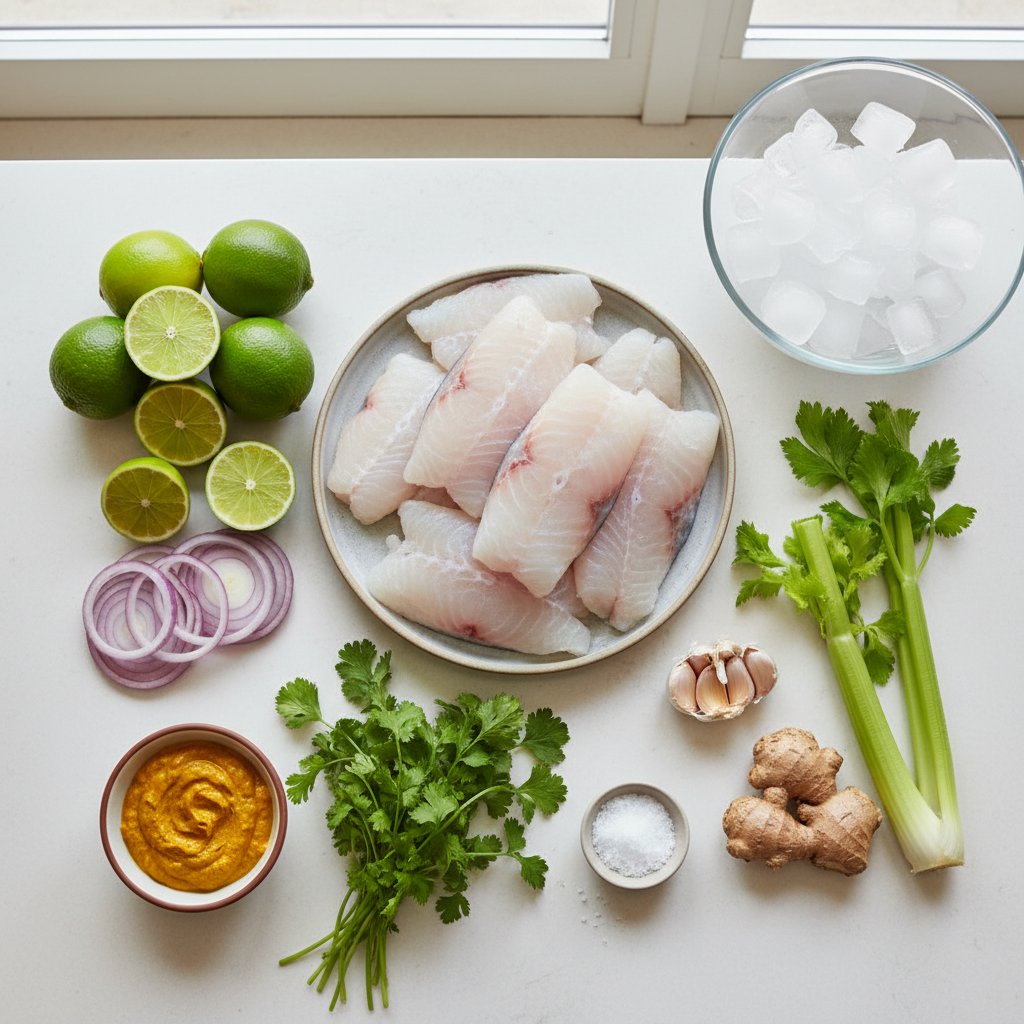
For a peruvian ceviche easy version that still tastes authentic, keep the ingredient list tight. Ají amarillo helps a lot, but you can still make a bright ceviche without turning it into a scavenger hunt.
Core ingredients (4 servings)
- 1.5 lb firm white fish (see options below), cut into 3/4-inch cubes
- 10–12 limes, juiced (about 3/4 to 1 cup), plus extra to adjust
- 1 small red onion, very thinly sliced
- 1 small garlic clove, finely grated (optional but helpful)
- 1 small piece ginger, finely grated (optional, adds brightness)
- 1–2 tbsp ají amarillo paste (or see swap)
- 1 celery stalk (for blending the leche de tigre)
- Cilantro, chopped (a small handful)
- Salt, to taste
- Optional: a few ice cubes (for the leche de tigre)
Fish options that usually behave well
- Sea bass (often the classic choice, pricey but forgiving)
- Halibut (firm and clean)
- Striped bass (firm, mild)
- Flounder/sole can work, but it’s delicate, shorten marinating time
If you can’t find ají amarillo
- Use a small amount of habanero or serrano plus a touch of yellow bell pepper for color, go cautiously.
- Or use a mild hot sauce you trust, but keep it subtle so lime stays the headline.
Step-by-step: peruvian ceviche easy method (timing is the whole game)
This is the version most home cooks can repeat without stress. Keep your bowl cold, prep everything first, and mix close to serving time.
1) Chill your setup
Put a mixing bowl in the fridge for 10–15 minutes, or set a metal bowl over a larger bowl with ice. Cold slows texture breakdown and keeps flavors snappy.
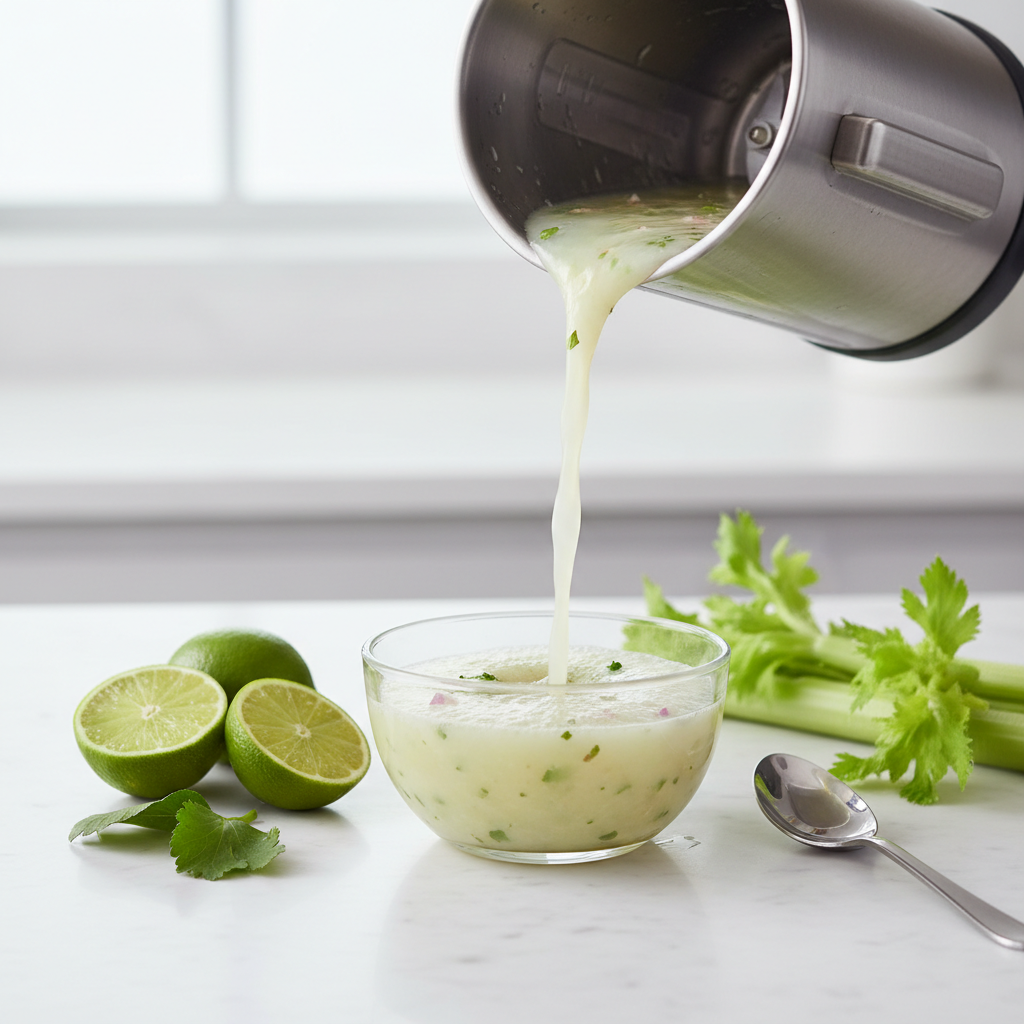
2) Make a simple leche de tigre
In a blender, combine: lime juice, celery (rough chopped), ají amarillo paste, garlic, ginger, a pinch of salt, a few cilantro stems, and 1–2 ice cubes. Blend until smooth, then taste for salt and heat.
If you want it cleaner, strain it. If you like a little body, leave it as-is.
3) Salt the fish briefly
Cube the fish, pat dry, then toss with a pinch of salt. Give it 3–5 minutes. This step helps seasoning penetrate without needing a long soak.
4) Combine and watch the clock
Add fish to the chilled bowl, pour in enough leche de tigre to coat generously, then fold gently. Let it sit 8–12 minutes for a tender center, or 12–18 minutes if you prefer it more “set.”
5) Add onion and cilantro near the end
Fold in red onion and chopped cilantro during the last 2–3 minutes so the onion stays crisp and the herbs stay bright.
6) Taste, adjust, serve immediately
Add a little more lime or salt if needed. Serve right away; ceviche rarely improves by waiting.
A small table that saves ceviche: timing, texture, and fixes
If you want consistent results, use this as your mental cheat sheet. Many “ceviche problems” are really just a mismatch between cut size and marinating time.
| What you want | Fish cube size | Marinate time (cold) | Common issue | Quick fix |
|---|---|---|---|---|
| Very tender, slightly translucent center | 3/4 inch | 8–12 min | Tastes under-seasoned | Add salt and a splash more lime, rest 2 min |
| More “set” and opaque | 1/2–3/4 inch | 12–18 min | Starts turning firm | Serve immediately, add a touch of ice-cold broth |
| Delicate fish (sole/flounder) still holds | 1 inch | 6–10 min | Mushy edges | Shorten time next batch, keep bowl colder |
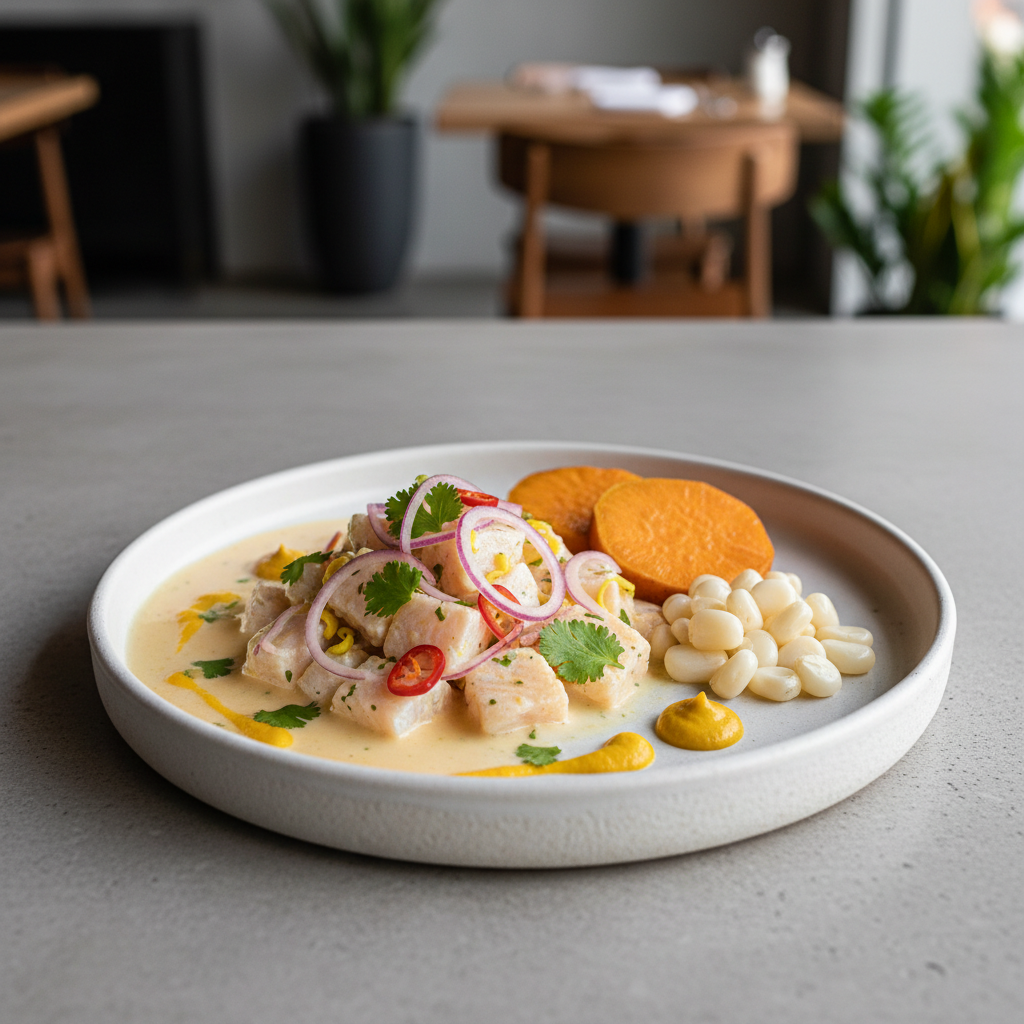
Serving ideas that feel Peruvian (without overthinking it)
Classic sides do two things: add sweetness or starch to balance the acidity, and give you something to scoop up the leche de tigre.
- Sweet potato (boiled or roasted, served chilled or room temp)
- Corn: if you can find Peruvian choclo, great; if not, regular corn works
- Plantain chips or a simple toasted corn nut-style crunch
- Lettuce leaves or thin cucumber slices for a lighter plate
Drink-wise, it pairs well with something crisp, even just sparkling water with lime. If you’re doing alcohol, keep it bright rather than heavy.
Food safety, sourcing, and storage (the part people skip)
Let’s be honest: citrus does not “sterilize” fish. It changes texture, but it does not reliably kill all pathogens. That’s why sourcing and cold handling matter so much.
- Buy from a reputable fish counter with high turnover, ask what’s freshest and firmest.
- Keep it cold on the way home and while prepping, a cooler bag helps if your drive is long.
- Use clean tools and avoid cross-contamination with other raw foods.
- Serve the same day. Leftover ceviche tends to get tougher and can be higher risk.
According to the Centers for Disease Control and Prevention (CDC), people at higher risk for foodborne illness may be advised to avoid raw or undercooked seafood, so if you’re cooking for a mixed group, offering a cooked option can be the simplest move.
Key takeaways (so you don’t have to reread)
- Cold bowl + firm fish prevents the “mushy ceviche” problem more than any fancy ingredient.
- 8–12 minutes is the sweet spot for many home kitchens, then serve.
- Leche de tigre gives you the Peruvian flavor signature, even with a few substitutions.
- Safety is sourcing: citrus changes texture, not risk level in a predictable way.
Conclusion: make it fresh, keep it simple, serve it fast
If you want peruvian ceviche easy to actually feel easy, treat it like a last-minute dish, not a make-ahead appetizer. Buy firm fish, chill your bowl, blend a quick leche de tigre, then marinate just long enough to hit the texture you like.
Pick one small upgrade for your next batch, maybe better fish, maybe colder prep, maybe ají amarillo, and you’ll notice the difference immediately.
FAQ
How long should I marinate Peruvian ceviche so it stays tender?
For firm white fish cubes, 8–12 minutes in a cold bowl often gives a tender bite with a slightly translucent center. If you push much past that, many fish start to firm up quickly.
Can I make ceviche ahead of time for a party?
You can prep everything ahead, but it’s better to combine close to serving. Slice onions, juice limes, blend the leche de tigre, cube fish, then mix 10–15 minutes before guests eat.
What fish is best for beginners making ceviche in the U.S.?
Sea bass, halibut, or striped bass are usually forgiving because they’re firm. Very delicate fish can still work, but the timing window gets tight.
Does lime juice “cook” the fish the same way heat does?
It changes the proteins and makes the exterior look opaque, but it’s not the same as heat cooking. If you need a lower-risk option, consider using cooked shrimp or quickly poached fish.
Why is my ceviche bitter?
Common culprits include over-squeezing limes (pressing oils from the peel), using older limes, or leaving citrus with pithy bits. Straining juice and using fresh limes usually helps.
How do I keep red onions from tasting too sharp?
Soak thin slices in ice water for 10 minutes, then drain well. You still get crunch and color, just less bite.
What can I use if I don’t have ají amarillo?
A tiny amount of serrano or habanero can provide heat, and a bit of yellow bell pepper can mimic the color. Keep the swap modest so it doesn’t turn into a different dish.
How should I store leftover ceviche?
If you have leftovers, refrigerate promptly in a sealed container and eat soon, but expect the texture to get firmer. If anyone in your household is higher risk, it may be better to avoid leftovers and make a smaller batch.
If you’re trying to get this dish into your weeknight rotation, it helps to keep a short shopping list and a repeatable timeline. If you want a more hands-off approach, prepping the leche de tigre and onions in advance can make the final mix feel almost effortless.