
Greek salad recipe questions usually come down to one thing, how do you keep it crisp, balanced, and actually satisfying without turning it into a soggy bowl of vegetables.
If you’ve ordered “Greek salad” in the U.S., you’ve probably seen a few versions, sometimes with lettuce, sometimes with pepperoncini, sometimes with a heavy dressing. None of that is wrong, but the classic approach is simpler and, in many kitchens, more consistent: tomatoes, cucumber, red onion, olives, feta, olive oil, and a little oregano.
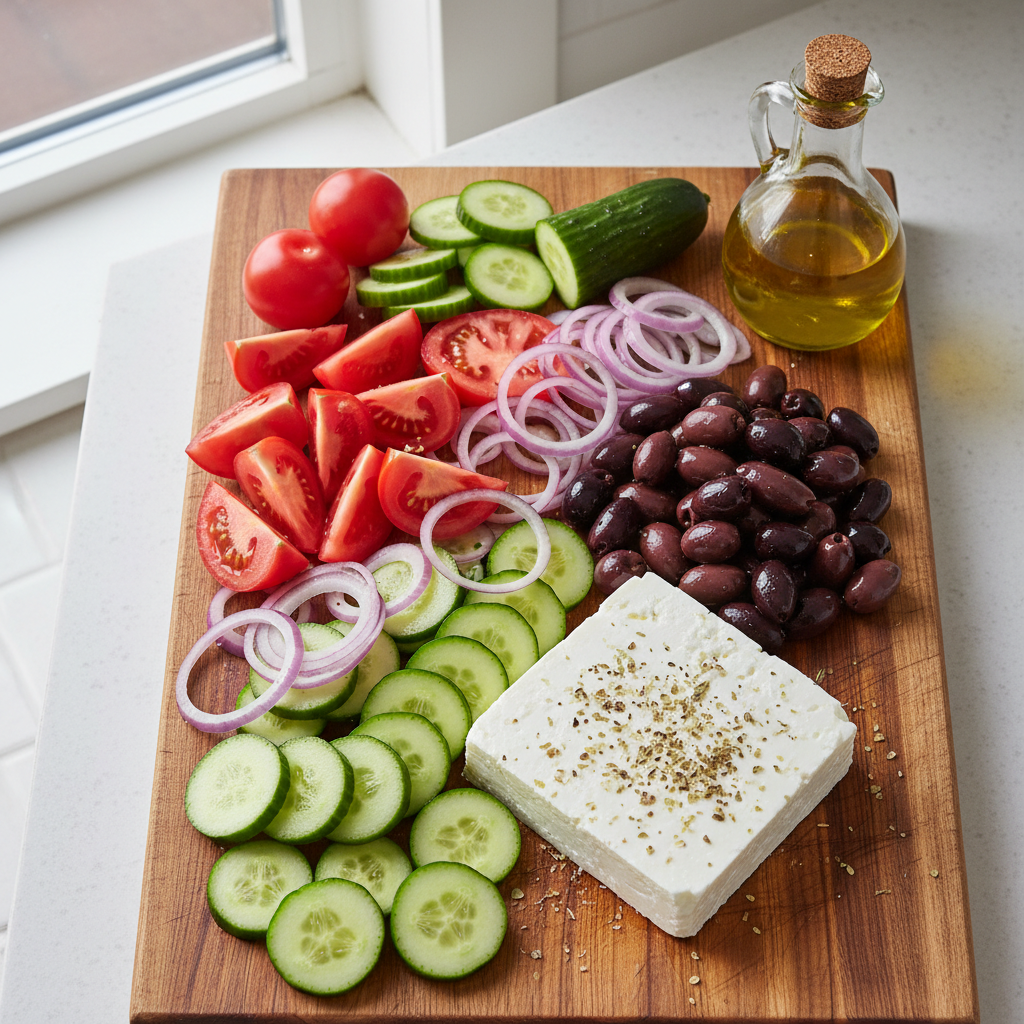
This article walks you through a classic Greek salad you can repeat at home, plus a few realistic “healthy” tweaks that don’t ruin what makes it Greek in the first place. You’ll also get a quick self-check for ingredient quality, a make-ahead plan, and a small table to help you swap based on diet needs.
What makes a “classic” Greek salad (and what doesn’t)
A traditional Greek salad, often called horiatiki, typically skips leafy greens and focuses on sturdy, juicy vegetables that hold texture. Many American versions add romaine for volume, which can be fine, but it changes the eating experience and how you dress it.
- Core components: tomatoes, cucumber, red onion, Kalamata olives, feta, olive oil, oregano, salt, and sometimes a splash of red wine vinegar.
- Common U.S. additions: lettuce, pepperoncini, chickpeas, grilled chicken. Helpful for a meal, not always “classic.”
- The real secret: ingredient quality matters more than technique, because there’s nowhere to hide.
According to the U.S. Food & Drug Administration (FDA)... produce should be washed under running water before prepping to reduce dirt and potential contaminants, even when you plan to peel it.
Why Greek salad can be a healthy choice (and where it can quietly go sideways)
This is one of those dishes that looks “healthy” by default, and often it is. You get fiber and hydration from vegetables, plus fats and flavor from olive oil and feta. But the calorie and sodium load can climb fast if you pour dressing like it’s a marinade.
- Olive oil: heart-friendly fats for many people, but still calorie-dense, so portion matters.
- Feta and olives: big flavor, also higher sodium, which some people need to watch.
- Store-bought dressings: can add sugar and extra oils that flatten the fresh taste.
If you have a medical reason to limit sodium or fat, it’s smart to tailor portions and, when in doubt, check with a qualified clinician or dietitian.
Quick self-check: are your ingredients “salad-ready”?
Before you start chopping, a 30-second check saves the whole bowl. This is where most “meh” salads happen: watery tomatoes, bitter cucumbers, or feta that tastes like straight salt.
- Tomatoes: smell them near the stem, if there’s no tomato aroma, the flavor will be muted.
- Cucumber: firm, not bendy, and the skin should look tight, not wrinkled.
- Red onion: crisp layers, no soft spots. If it’s too sharp for you, plan to soak it.
- Olives: choose Kalamata when possible for the classic profile, and avoid overly mushy olives.
- Feta: buy in brine if you can, it usually tastes creamier and less chalky than pre-crumbled.
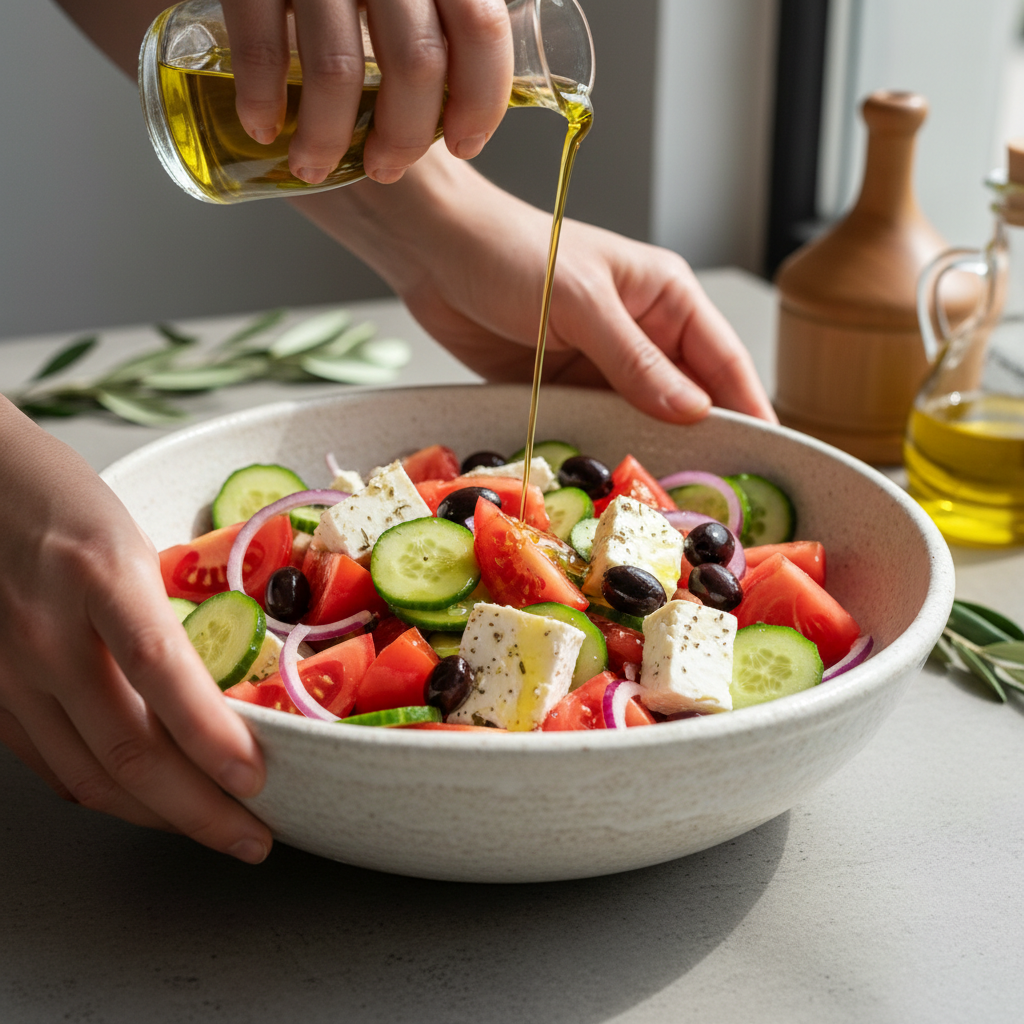
One more thing people underestimate: cut size. If the vegetables are chopped too small, they leak water faster and the salad turns soupy.
Classic Greek salad recipe (healthy, simple, repeatable)
This greek salad recipe sticks to the classic structure and keeps the “healthy” part practical: moderate oil, bold flavor, and enough salt from feta and olives that you don’t need much extra.
Ingredients (serves 4 as a side, 2 as a light meal)
- 3 medium ripe tomatoes, cut into wedges
- 1 large cucumber, sliced into half-moons (peel optional)
- 1/2 red onion, thinly sliced
- 1/2 cup Kalamata olives
- 4–6 oz feta, cut into chunks (or lightly crumbled)
- 2–3 tbsp extra-virgin olive oil
- 1–2 tsp red wine vinegar or lemon juice (optional, to taste)
- 1/2 tsp dried oregano, plus more to finish
- Black pepper, to taste
- Salt, optional and usually minimal
Steps
- Prep the onion (optional but helpful): soak sliced onion in cold water 10 minutes, then drain and pat dry to soften the bite.
- Cut and combine: add tomatoes, cucumber, onion, and olives to a bowl.
- Dress lightly: drizzle olive oil, add vinegar or lemon if using, sprinkle oregano and pepper.
- Add feta last: fold in gently, or place feta on top so it stays chunky.
- Taste before salting: feta and olives often handle it.
Key point: if you want peak texture, dress right before serving, not 30 minutes ahead.
Make it a meal: smart add-ons that still taste “Greek”
A classic bowl can feel light for some people, especially if you’re used to lunch salads with grains or protein. The trick is adding substance without burying the fresh tomato-cucumber flavor.
- Protein: grilled chicken, shrimp, or canned chickpeas (rinsed well) for a vegetarian option.
- Carbs: warm pita, toasted sourdough, or a small scoop of cooked farro.
- Extra crunch: sliced bell pepper, but keep it secondary.
- Herbs: a little fresh parsley or dill can lift the whole bowl.
If you’re meal-prepping, store the feta and dressing separately. It’s a small hassle, but it keeps the vegetables from collapsing by day two.
Swap table: adjust for taste, diet needs, and what’s in your fridge
Real kitchens have constraints, and this greek salad recipe is flexible as long as you respect the basics: sturdy veg, salty-briny accents, and a simple oil-based finish.
| What you have / need | Swap | What changes |
|---|---|---|
| Not a fan of strong onion | Soak red onion, or use scallions | Less bite, slightly less “classic” |
| Lower sodium preference | Use less feta, add more cucumber/tomato | Still satisfying, but milder flavor |
| No red wine vinegar | Lemon juice | Brighter, more citrus-forward |
| No Kalamata olives | Castelvetrano or black olives | Less briny, more buttery or mild |
| Dairy-free | Skip feta, add extra olives + herbs | Less creamy-salty, still fresh and punchy |
Common mistakes (the stuff that makes it watery or bland)
- Over-dressing: oil should coat, not pool. Add a little, toss, then decide.
- Cutting too early: tomatoes leak, cucumbers weep, and you end up with salad “broth.”
- Using pre-crumbled feta only: it can taste dry; blocks in brine often bring better texture.
- Salting before tasting: feta plus olives can push it over the edge fast.
- Chilling everything too hard: super-cold tomatoes lose aroma, cool is good, icy is not.
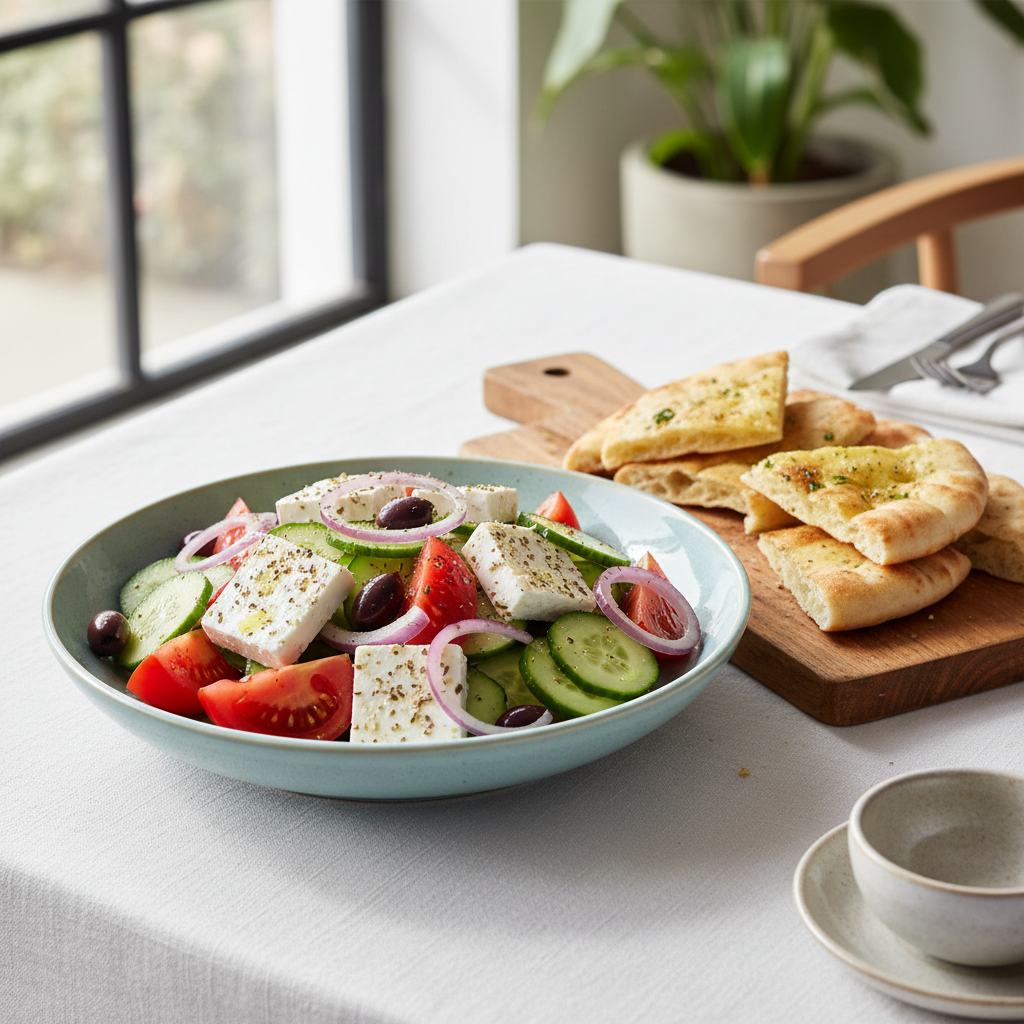
If you’re chasing “restaurant flavor,” it’s usually not sugar. It’s good olive oil, ripe tomatoes, and enough oregano to notice.
Practical prep plan (so lunch doesn’t turn soggy)
For weeknights, this is the low-stress approach that works in many households.
- Up to 2 days ahead: slice onion and store in water in the fridge, drain before using.
- Up to 1 day ahead: portion olives and feta, keep separate and covered.
- Right before eating: cut tomatoes and cucumber, then dress and combine.
Key takeaways: keep wet ingredients uncut until the last moment, use a light hand with oil, and let feta and olives do most of the seasoning work.
Conclusion: keep it classic, keep it fresh
A solid greek salad recipe isn’t complicated, it’s just honest: ripe produce, briny accents, and a simple finish. If yours keeps turning watery, it’s usually timing and cut size, not your dressing skills.
Pick one small upgrade this week, buy feta in brine, soak the onion, or dress at the table, then see what changes. That’s how this salad goes from “fine” to something you actually crave.
FAQ
Is a Greek salad recipe healthy for weight loss?
It can be, because it’s vegetable-heavy and filling, but olive oil and feta add calories quickly. Using a measured amount of oil and a moderate feta portion often keeps it aligned with many weight goals.
Do I have to use lettuce?
No. Many classic versions skip lettuce entirely. If you like the extra crunch and volume, romaine works, just dress lightly so it doesn’t wilt.
What’s the best feta for Greek salad?
Many cooks prefer feta sold as a block in brine for creamier texture and better flavor. Pre-crumbled is convenient, but it can taste drier and saltier.
How do I keep Greek salad from getting watery?
Cut tomatoes right before serving, keep dressing separate, and avoid chopping vegetables too small. If tomatoes are very juicy, you can drain the bowl briefly before adding feta.
Can I make it ahead for meal prep?
Yes, but store components separately. Prep onion, olives, and feta ahead, then cut tomatoes and cucumber and dress right before eating for the best texture.
Is red wine vinegar required?
Not required. Some people use only olive oil, oregano, and the natural tomato juices. Vinegar or lemon adds brightness, so it’s more about your taste.
What protein goes best with Greek salad?
Grilled chicken and shrimp pair well without overpowering. Chickpeas are a good pantry option; rinse well to reduce extra sodium.
Is Greek salad safe for people with high blood pressure?
It depends. Olives and feta can raise sodium intake, so adjusting portions may help, and it’s worth checking with a healthcare professional if you’ve been told to limit sodium.
If you’re trying to eat lighter without getting bored at lunch, this greek salad recipe is a good “base salad” to keep in rotation, then you can decide case-by-case whether you want it classic, higher-protein, or lower-sodium without losing the core flavor.