
best papdi chaat recipe delhi easy is what you want when you crave that North Indian street-snack hit but don’t want a complicated project or a sink full of dishes.
Papdi chaat looks like “just toppings,” yet it’s surprisingly easy to miss the Delhi vibe if the crunch turns soggy, the yogurt tastes flat, or the chutneys feel one-note. The good news, you can fix all three with a few small choices, not fancy ingredients.
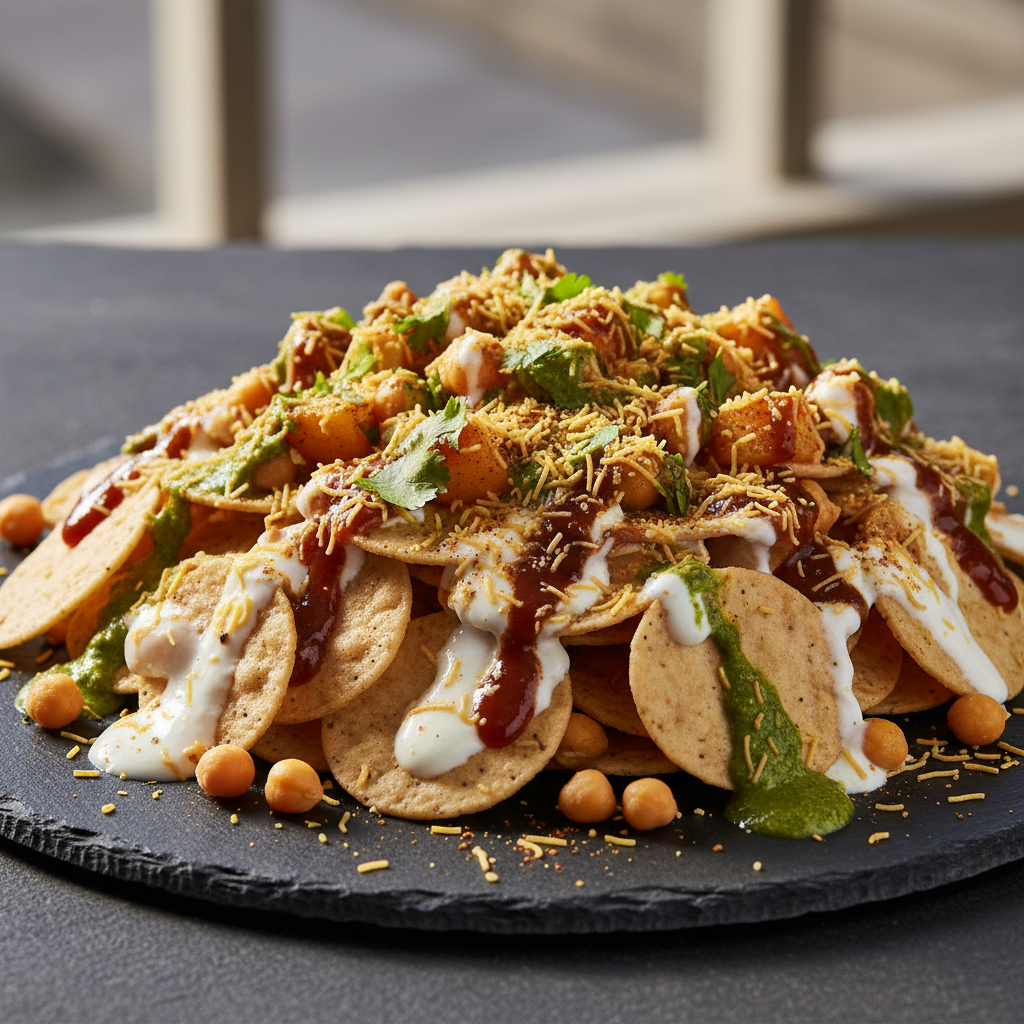
In this guide, you’ll get a reliable ingredient list, a timing plan that keeps things crisp, and a couple of “Delhi-style” tricks that usually separate a decent chaat from the one people keep picking at even after dinner.
What makes Delhi papdi chaat taste different
Delhi papdi chaat typically leans bold and layered, not just spicy. You taste sweet, sour, creamy, crunchy, then a little heat, all in one bite. If one element dominates, it stops feeling like street-style.
- Contrast, not chaos: yogurt cools, chutneys punch, papdi snaps, sev adds airy crunch.
- Chaat masala timing: a final dusting right before serving smells brighter than mixing it early.
- Texture control: wet ingredients touch papdi at the last minute, otherwise you get “nachos left in salsa.”
According to USDA FoodData Central, plain yogurt and chickpeas bring protein and minerals, but in chaat they also add creaminess and body. Flavor still comes from chutneys, spices, and balance, not nutrition claims.
Ingredients you need (plus smart substitutions in the US)
You can make this with a typical US grocery run plus one Indian pantry stop, or even fully grocery-store if you simplify chutneys. The key is choosing ingredients that hold texture.
Core components
- Papdi (store-bought is fine), or sturdy plain crackers in a pinch
- Boiled potato, diced small
- Cooked chickpeas (canned, rinsed and drained)
- Plain yogurt (whole milk tastes closer to street style)
- Tamarind-date chutney (imli) for sweet-tang
- Green chutney (cilantro-mint) for heat and freshness
- Sev (thin gram flour noodles), optional but very “Delhi”
- Chaat masala, roasted cumin powder, red chili powder
- Salt, black salt (kala namak) if available
Easy substitutions (when you can’t find one thing)
- No papdi: use mini tostadas, pita chips, or sturdy crackers, pick something that stays crisp.
- No sev: crushed salty potato sticks, or lightly crushed kettle chips, different vibe but still crunchy.
- No tamarind chutney: mix tamarind concentrate with warm water, date syrup or brown sugar, pinch of salt.
- No green chutney: blend cilantro, mint, jalapeño or serrano, lemon/lime, salt, a little water.
Quick prep plan (keep it crisp, keep it fast)
This is where most “easy” recipes quietly fail, they assemble too early. You’ll get better results if you treat papdi chaat like a last-minute build with prepped components.
| Task | Time | Make-ahead window |
|---|---|---|
| Boil and dice potatoes | 15–25 min | Up to 2 days, chilled |
| Rinse chickpeas, optional quick spice toss | 5 min | Up to 2 days, chilled |
| Whisk yogurt with salt + sugar | 3 min | Up to 24 hours, chilled |
| Make or open chutneys | 5–15 min | Green: 2–3 days, Tamarind: 1–2 weeks |
| Assemble chaat | 5–8 min | Serve immediately |
Key takeaway: prep everything earlier, assemble at the table, and your best papdi chaat recipe delhi easy attempt will actually taste like it.
Step-by-step: best easy Delhi papdi chaat recipe
This makes about 4 snack portions. Scale up by prepping more components rather than stacking taller, taller stacks get messy fast.
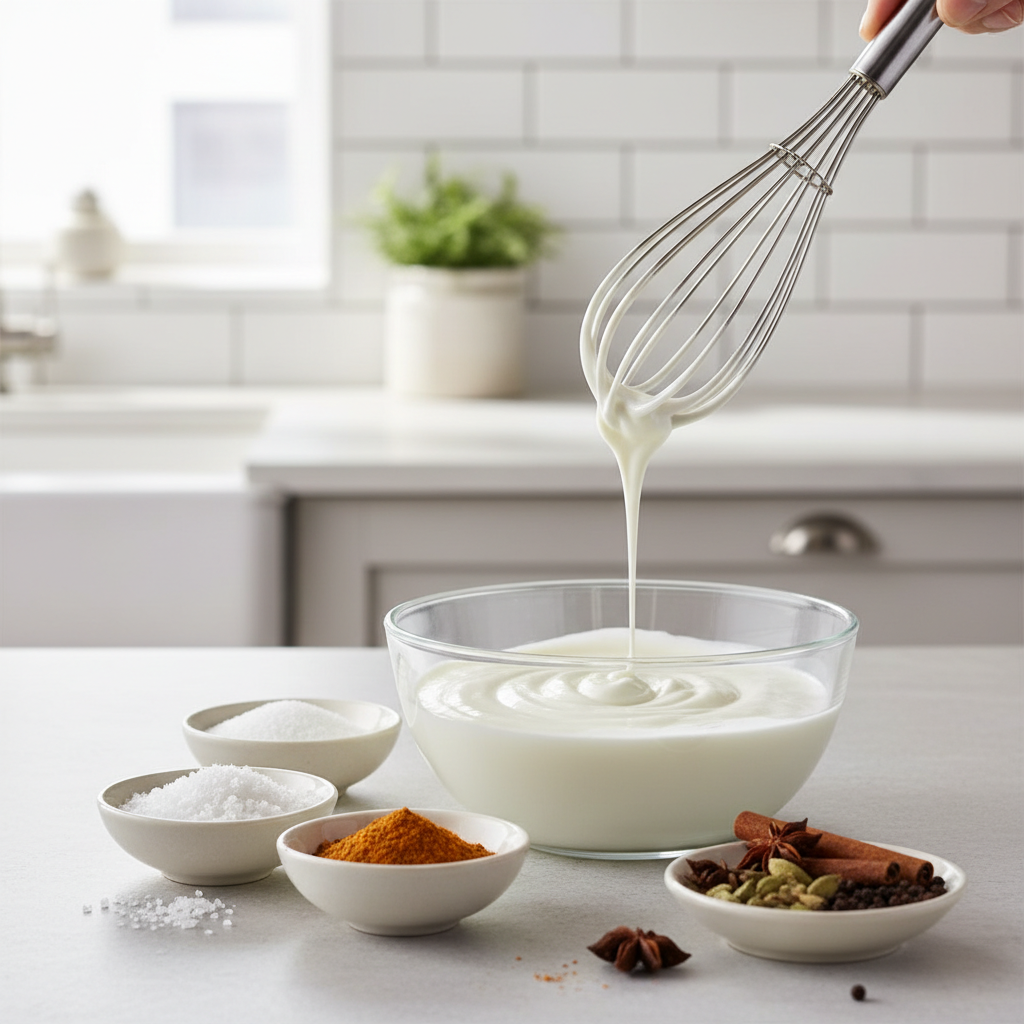
1) Mix the “Delhi-style” yogurt
- 1 cup plain yogurt
- 2–3 tbsp water (thin to a drizzle)
- 1–2 tsp sugar (yes, it matters for balance)
- 1/4 tsp salt, optional pinch black salt
- Whisk until smooth and pourable
2) Season the chickpeas (optional, but worth 2 minutes)
- 1 cup chickpeas, drained
- Pinch salt, pinch roasted cumin powder, tiny pinch chili powder
- Toss, then set aside
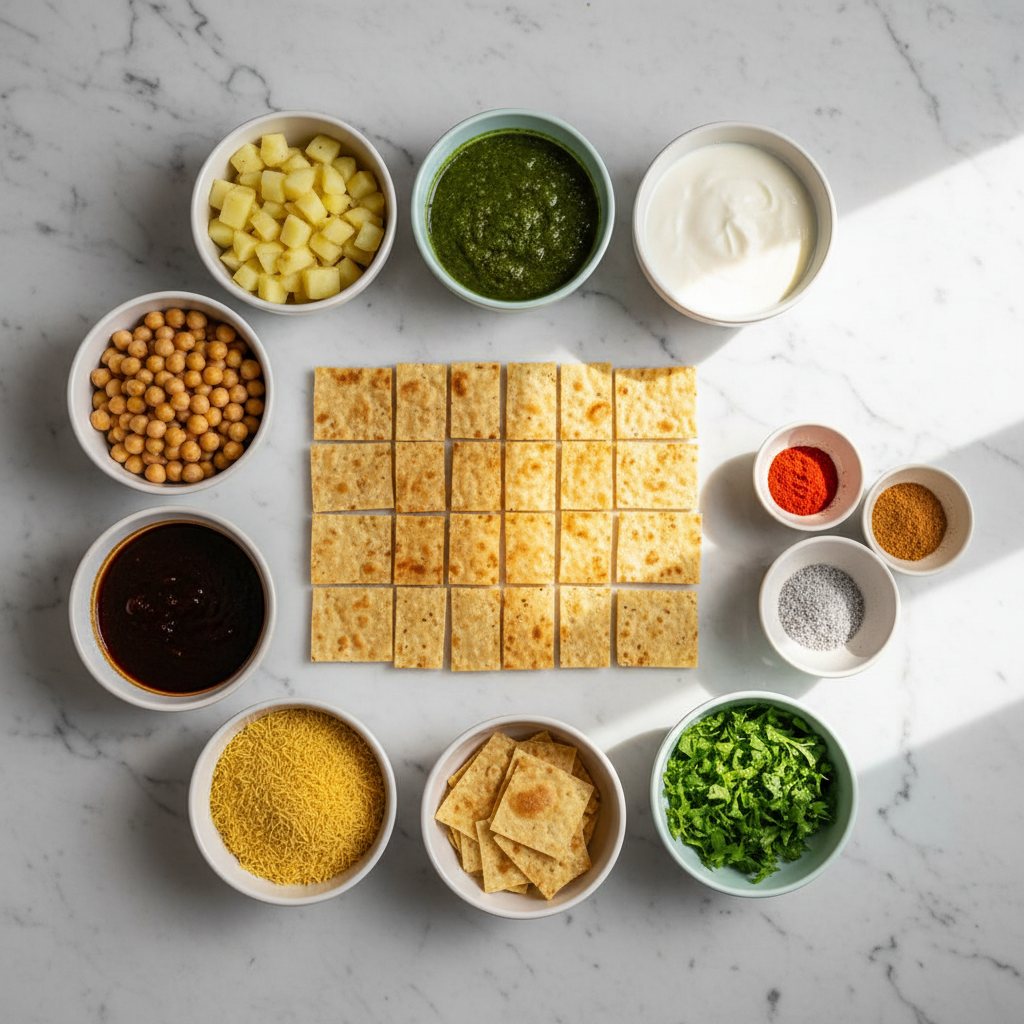
3) Set up your assembly line
- 2 cups papdi (or crackers)
- 1 cup boiled potato, diced
- Tamarind-date chutney and green chutney, ready to drizzle
- Sev, chopped cilantro, optional pomegranate arils or finely chopped red onion
4) Assemble (do not walk away mid-build)
- Lay papdi on a plate in one layer.
- Add a small spoon of potato and chickpeas per papdi.
- Drizzle yogurt lightly.
- Add tamarind chutney, then green chutney.
- Finish with sev, a pinch of chaat masala, and chopped cilantro.
If you want it more “Delhi street cart,” keep the drizzles thin and repeat once: a second light yogurt + tamarind pass tastes more layered than one heavy pour.
How to customize heat, sweetness, and texture (without ruining balance)
Most people try to “fix” papdi chaat by adding more chutney, then it turns wet and heavy. Adjust with small levers instead.
- Too sour: add a touch more sweet tamarind chutney or a pinch of sugar in yogurt.
- Too sweet: add more green chutney, a pinch of black salt, or a squeeze of lemon.
- Not spicy enough: use a hotter chili powder sparingly, or blend a hotter pepper into green chutney.
- Soggy: assemble per plate, not in a bowl, and keep wet toppings off papdi until serving.
- Missing “chaat” aroma: chaat masala at the end, plus roasted cumin, usually fixes it.
Quick reality check: spice blends vary a lot by brand. Start light, taste, then adjust, this alone makes a best papdi chaat recipe delhi easy approach more repeatable.
Common mistakes that make papdi chaat disappointing
These show up constantly in home kitchens, even when the ingredients are “right.”
- Over-thick yogurt: if it sits like sour cream, it won’t spread flavor, thin it slightly.
- Cold, bland potatoes: salt them, and if they’re fridge-cold, let them sit 10 minutes so flavors open up.
- One giant pile: the bottom turns mushy, the top dries out, single-layer is more forgiving.
- Chutney overload: more sauce is not more flavor, it’s usually more sogginess.
- Skipping the final dusting: chaat masala and cumin at the end matter more than people expect.
Food safety, dietary notes, and when to ask a pro
Papdi chaat is generally low-risk if you handle yogurt and cooked ingredients properly, but it’s still a dairy-and-room-temperature snack in many kitchens.
- Keep yogurt chilled until serving, and don’t leave assembled chaat sitting out long, especially in warm rooms.
- Allergies: sev and papdi often contain wheat, and some mixes may have traces of nuts, check labels.
- Sodium: chaat masala, black salt, and packaged snacks add up, if you monitor sodium, use lighter seasoning.
- Medical diets: if you manage diabetes, reflux, or IBS, spicy-tangy foods may trigger symptoms, consider consulting a qualified professional for personal guidance.
If you’re serving a crowd, the safest approach is a “build-your-own” setup with chilled yogurt and chutneys, and keep papdi sealed until the moment people start assembling.
Practical serving ideas (so it feels like a snack you’d reorder)
Papdi chaat shines when it’s casual and fast. If you try to plate it like a composed salad, it tends to sit too long.
- For parties: set out papdi, toppings, and chutneys separately, let everyone assemble.
- For weeknights: prep potatoes and yogurt earlier, assemble a small plate right before eating.
- For kids or spice-sensitive guests: keep green chutney on the side, lean on yogurt + sweet tamarind.
Key points to remember: thin yogurt, light drizzles, final spice dusting, and assemble right before serving. That’s most of the “Delhi secret,” honestly.
Conclusion: your easiest path to Delhi-style flavor at home
If your goal is the best papdi chaat recipe delhi easy enough for a regular weeknight, focus less on hunting “perfect” ingredients and more on timing and balance, prep components ahead, build fast, and season at the end.
Make it once as written, then change one variable next time, maybe spicier green chutney or a punchier tamarind drizzle. That small, controlled tweaking is how you land on a version that tastes like your favorite street stall, without the trial-and-error chaos.