
best sabudana khichdi recipe fast is really about one thing: getting fluffy, separate pearls with crisped potato bits, without babysitting a pan or guessing soak time.
If you live in the U.S., the tricky part is that sabudana brands vary a lot, even within the same grocery chain, so the “soak for X hours” advice you see online can feel unreliable. The good news, you can make this dish predictable by judging texture instead of the clock.
I’ll walk you through a fast, repeatable method, how to test soaked sabudana in 10 seconds, and what to do when it turns gummy, dry, or bland. You’ll also get a quick table for timing, plus a troubleshooting list you can save.
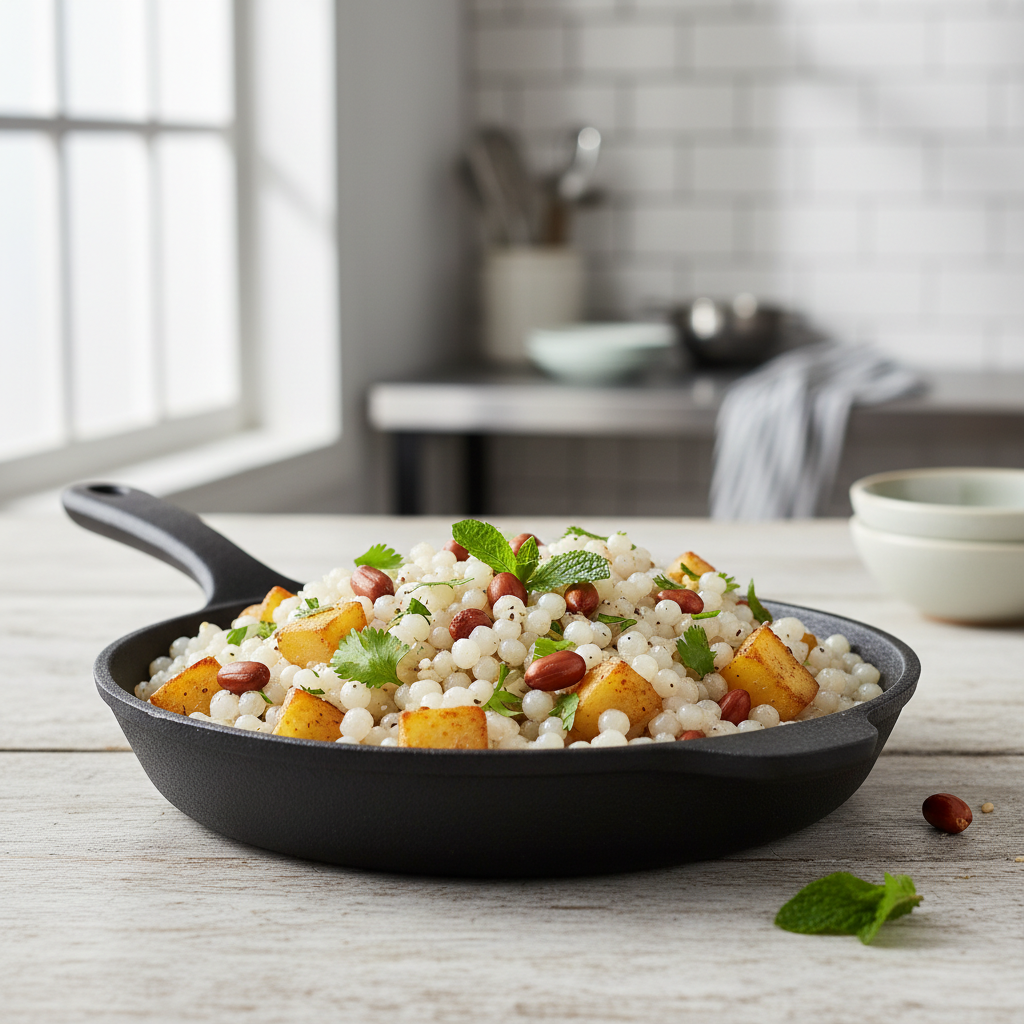
What makes sabudana khichdi “fast” without tasting rushed
Fast sabudana khichdi doesn’t mean skipping soaking, it means soaking smarter and cooking in a way that prevents sticking. Most slowdowns come from two moments: over-soaking (then it turns gluey), or under-soaking (then you keep adding water and it still feels hard).
In many kitchens, speed comes from three small choices that compound:
- Use a wide pan so steam escapes and pearls don’t clump.
- Pre-roast or use ready roasted peanuts, then grind coarsely for flavor and dryness control.
- Par-cook potatoes if you want weeknight speed, or cut smaller for quicker browning.
One more thing that surprises people: you usually don’t need extra water while cooking. If you’re adding water to “fix” sticking, that often makes it worse.
Ingredients and swaps (U.S.-friendly)
This is a classic base, with swaps that are easy to find in American grocery stores. Amounts are flexible; sabudana khichdi is forgiving on seasoning, less forgiving on moisture.
Core ingredients
- Sabudana (tapioca pearls), small to medium size
- Potatoes, Yukon Gold or red potatoes hold shape well
- Roasted peanuts, unsalted if possible
- Ghee or neutral oil (avocado, canola)
- Cumin seeds
- Green chilies (serrano works well), optional
- Salt (or sendha namak/rock salt if you follow fasting rules)
- Lemon juice and cilantro for finishing
Useful add-ins (optional)
- Grated coconut for sweetness and texture
- Crushed black pepper for gentle heat
- A pinch of sugar if your peanuts taste very “dry”
According to USDA FoodData Central, peanuts contribute protein and unsaturated fats, which is one reason this dish can feel satisfying even when it’s meatless or served as a light meal.
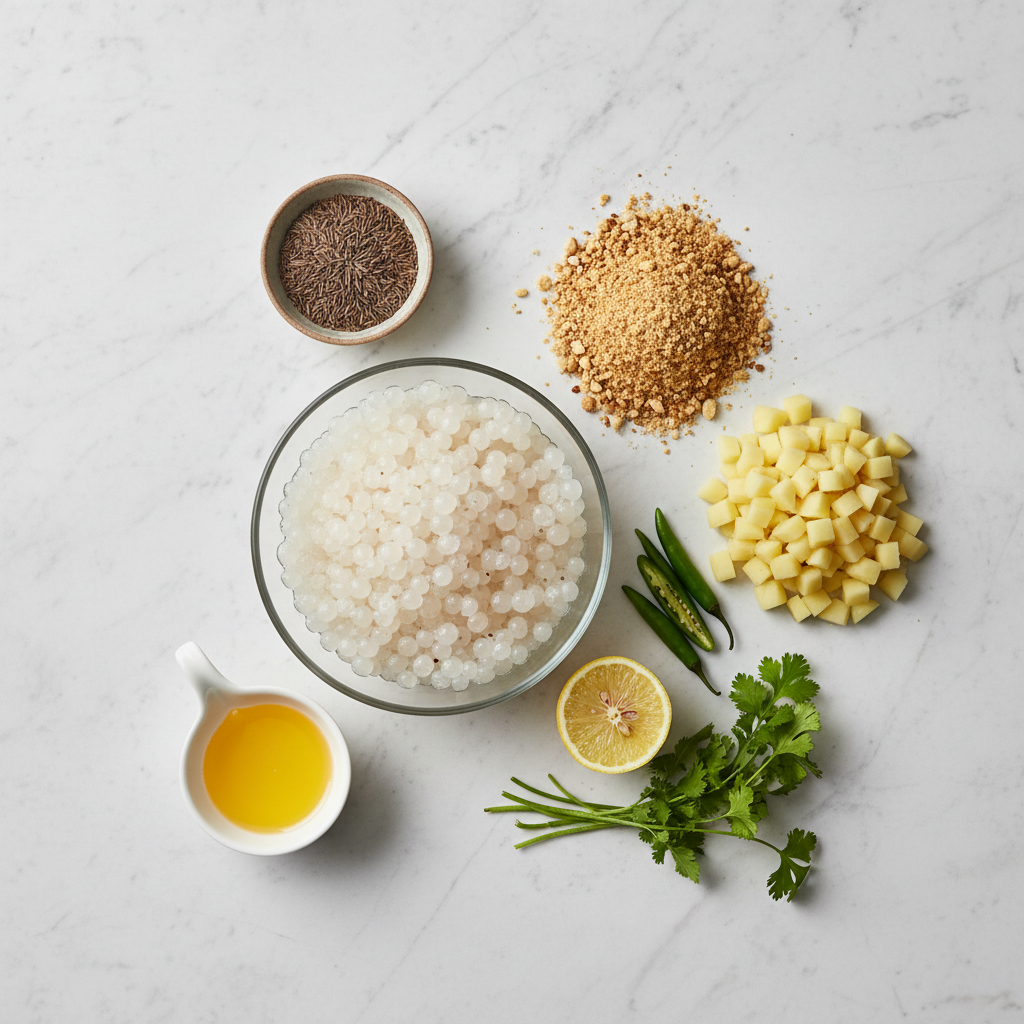
Fast soak method: the 10-second texture test
The fastest path to the best sabudana khichdi recipe fast is to stop trusting fixed soak times and start checking texture. Different brands and pearl sizes drink water differently, and your room temperature changes the result too.
Rinse and soak (quick, controlled)
- Rinse sabudana 2–3 times until water looks less cloudy, then drain well.
- Add just enough water to barely cover the pearls, then cover the bowl.
- Rest at room temperature, then check texture instead of the clock.
The 10-second test
- Press 1–2 pearls between your fingers.
- Ready: outside feels soft, center has no hard dot, pearl holds shape.
- Under-soaked: you feel a hard core, add 1–2 tbsp water, wait 20–30 minutes.
- Over-soaked: pearl smears easily, looks overly translucent, you’ll need “dry helpers” when cooking.
If you’re in a rush, some cooks use warm water to speed soaking, but it can push pearls into over-soaked territory quickly. If you try it, check every 15 minutes and drain as soon as they pass the finger test.
Timing cheat sheet (so you can plan dinner)
This table is practical planning, not a promise. Sabudana is the variable, so treat the soak range as a starting point and let the texture test decide.
| Step | Typical time | What you’re looking for |
|---|---|---|
| Rinse + drain sabudana | 5–8 min | Less cloudy water, pearls not sitting in water |
| Soak (covered) | 2–6 hours | Soft pearl, no hard core when pressed |
| Peanut prep | 2–5 min | Coarsely crushed, not peanut butter-fine |
| Potato cook | 8–15 min | Golden edges, tender inside |
| Finish khichdi | 5–8 min | Pearls look glossy, separate, not wet |
Step-by-step: best fast sabudana khichdi (stovetop)
This method prioritizes separation and speed. The biggest “secret” is heat control: medium to medium-high for potatoes, then medium-low once sabudana goes in.
1) Prep the peanut mix
- Coarsely crush roasted peanuts (a few pulses in a blender, or a zip bag and rolling pin).
- Mix peanuts with salt and a pinch of sugar if you like a balanced finish.
2) Cook potatoes first
- Heat ghee or oil in a wide pan.
- Add cumin seeds, let them sizzle.
- Add diced potatoes, cook until golden and mostly tender, stirring occasionally.
3) Add aromatics
- Add chopped green chili (optional), stir 20–30 seconds.
- If you like ginger, add a tiny amount, but keep it subtle so it doesn’t fight the peanut flavor.
4) Add sabudana and cook gently
- Make sure soaked pearls are well drained, then add to the pan.
- Sprinkle peanut mix, toss gently so the peanuts coat the pearls.
- Cook on medium-low, stirring every minute or so, until pearls look translucent and glossy.
5) Finish and serve
- Turn off heat, add lemon juice and cilantro.
- Rest 2 minutes, then serve warm.
Key point: if you keep stirring aggressively, you mash pearls and trigger sticking. Gentle folding works better, even if it feels slower.
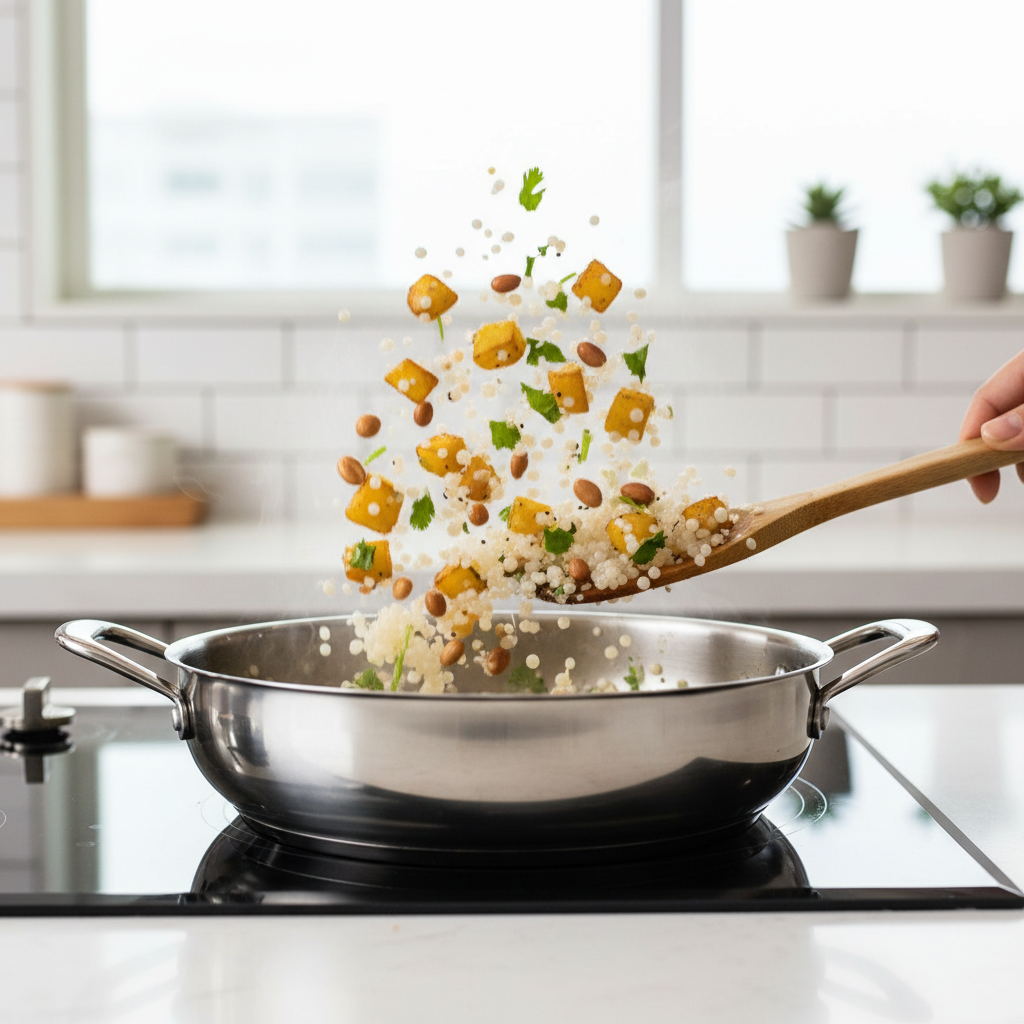
Quick self-check list: why yours turns sticky, hard, or bland
If your last attempt felt off, it usually comes down to moisture balance and heat. Use this quick list to diagnose before you change the whole recipe.
- Sticky and clumpy: pearls over-soaked, pan too small, heat too low with trapped steam, or too much stirring.
- Hard center: under-soaked, or cooked too briefly after adding to the pan.
- Dry and crumbly: not enough fat, peanuts ground too fine, or cooked too long uncovered.
- Bland: not enough salt, skipped lemon, peanuts not roasted enough, or potatoes under-seasoned.
- Burning at bottom: heat too high after sabudana goes in, or not enough fat coating the pan.
In practice, many “sticky” cases are actually over-soaked pearls plus a deep saucepan. A wide skillet fixes more than people expect.
Fixes and upgrades (without starting over)
Sometimes you’re already mid-cook and just want dinner. These are the realistic saves.
If it’s getting sticky
- Lower heat, spread mixture in a thinner layer, then let it sit 60–90 seconds.
- Add 1–2 tbsp coarsely crushed peanuts, fold gently.
- A small drizzle of ghee can help coat pearls, but don’t drown the pan.
If it tastes flat
- Add a bit more salt, then lemon juice in small squeezes.
- Finish with chopped cilantro and a pinch of roasted cumin powder if you like that flavor.
If pearls feel hard
- Cover the pan for 2 minutes on low heat, then uncover and stir gently.
- If needed, add 1 tbsp water around the edges, not directly on top, then cover briefly.
That last move is a “break glass” fix, because extra water can push you toward gumminess, but in small amounts it can rescue under-soaked pearls.
Common mistakes (and what to do instead)
- Soaking in lots of water: use minimal water and drain well, pearls should not sit in a puddle.
- Grinding peanuts too fine: keep a coarse grind, it acts like a texture buffer.
- Using a nonstick pan that’s too deep: choose width over depth, steam needs an exit route.
- Adding lemon early: add at the end, acidity earlier can make the dish smell sharp.
- Cooking sabudana on high heat: potatoes like higher heat, sabudana rarely does.
If you’re making this for fasting, ingredient rules vary by tradition and family. It’s worth double-checking what counts as acceptable in your context, especially around salt and spices.
Storage, reheating, and when to ask for help
Sabudana khichdi is best fresh, but you can store leftovers in the fridge in an airtight container for about 1–2 days. Reheat in a skillet on low with a tiny splash of water or a little ghee, then break up gently.
If you manage blood sugar, follow a medically prescribed diet, or you’re planning this as a staple meal, it may be smart to talk with a registered dietitian. Tapioca is mostly carbohydrate, so portion size and pairings can matter for some people.
When it keeps failing even after texture testing, consider switching brands or pearl size. In the U.S., the same “sabudana” label can behave differently batch to batch, and troubleshooting gets easier once you find a consistent one.
Conclusion: make it fast by making it predictable
The best sabudana khichdi recipe fast is less about shortcuts and more about control: drain well, use a wide pan, rely on the finger test, and let peanuts do some of the moisture-management work.
If you want one action step today, soak a small test batch and practice the 10-second texture check, then cook it once with a wide skillet. That single run usually tells you exactly how your brand behaves, and the next batch feels effortless.
Key takeaways
- Texture test beats soak time, especially with different U.S. brands.
- Wide pan + gentle folding keeps pearls separate.
- Coarse peanuts add flavor and help prevent gumminess.