
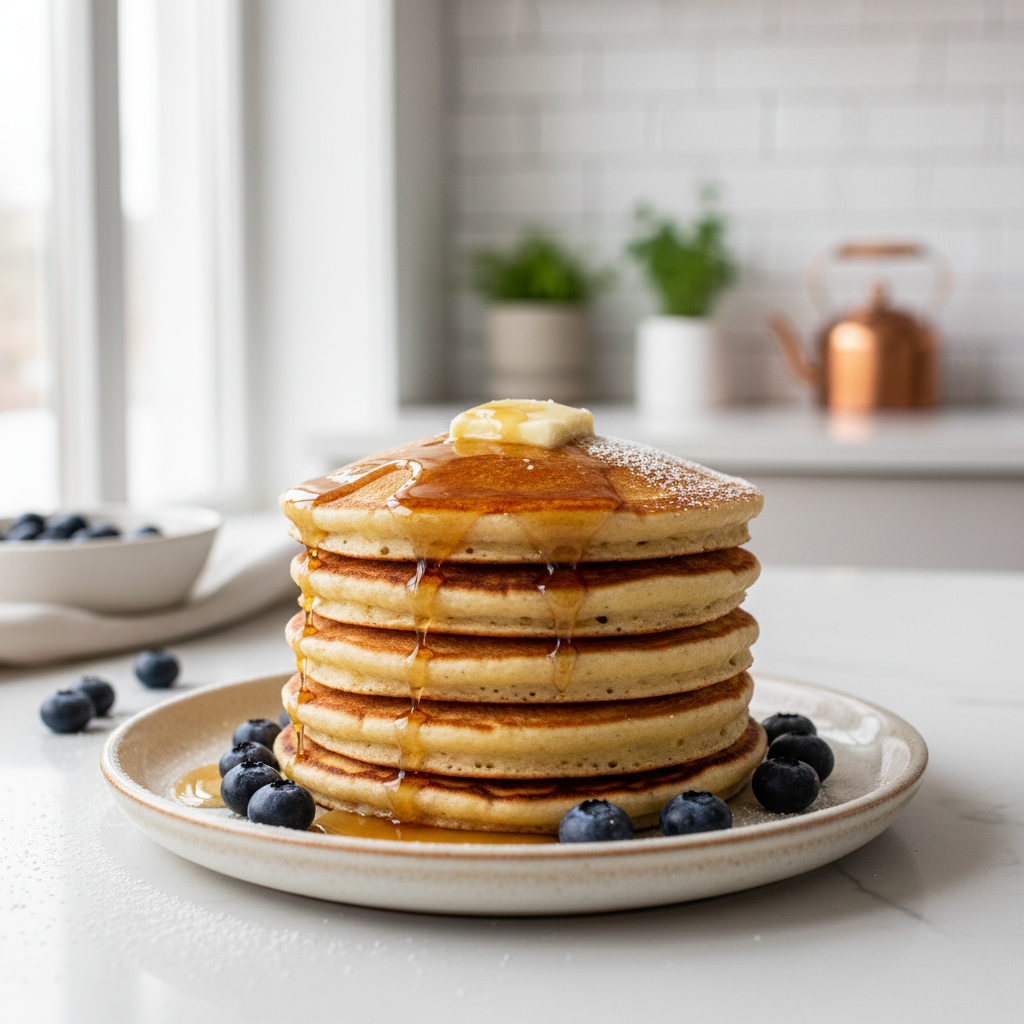
Pancakes from scratch can be light, tall, and tender, but most “flat pancake” problems come from a few small habits: overmixing, tired leavening, or cooking too hot.
If you want that diner-style fluff without boxed mix, this recipe gives you a reliable base, plus the little checks that keep texture consistent. It’s not complicated, it just rewards a calmer batter and a steadier pan.
One quick note before we start: according to USDA food safety guidance, perishables like eggs and milk should not sit at room temperature too long, so keep ingredients chilled until you’re ready and refrigerate leftovers promptly.
What makes pancakes fluffy (and why they turn out dense)
Fluffiness is mostly trapped gas: bubbles created in batter, then “set” by heat before they escape. A few real-world culprits usually steal that lift.
- Overmixing: the more you stir, the more gluten develops, and the batter loses tenderness.
- Old baking powder: it can lose punch over time, so the batter doesn’t rise much.
- Wrong heat: too hot browns the outside before the center puffs; too low dries pancakes out.
- Letting batter sit too long: chemical leavening starts working right away, and waiting can waste the bubbles.
There’s also a sneaky one: measuring flour by scooping directly from the bag often packs in extra flour, which turns pancakes bready. If you’ve ever thought “I followed the recipe,” this is often why it still felt off.
Ingredients for fluffy pancakes from scratch
This is the base I’d use if I wanted classic flavor, not overly sweet, with a soft interior and browned edges. If you keep these pantry items on hand, you can make pancakes from scratch anytime.
Core ingredients
- All-purpose flour
- Baking powder (primary lift)
- Sugar (a little helps browning and tenderness)
- Salt (don’t skip, it makes the flavor “wake up”)
- Milk (dairy or unsweetened non-dairy works in many cases)
- Egg
- Melted butter or neutral oil
- Vanilla extract (optional, but friendly)
Quick swap table
| Need | Swap | What changes |
|---|---|---|
| No buttermilk | Milk + 1 tbsp lemon juice or vinegar (rest 5 min) | More tang, slightly softer crumb |
| Dairy-free | Unsweetened oat or almond milk + oil | Often a bit less rich, still fluffy |
| Lower sugar | Cut sugar in half | Less browning, flavor more “bready” |
| No butter | Neutral oil (same amount) | Softer texture, less buttery aroma |
Fluffy pancakes from scratch recipe (step-by-step)
This recipe makes about 8 medium pancakes (4-inch to 5-inch). If you need a crowd batch, it doubles cleanly, but keep the “don’t overmix” rule even more firmly.
Ingredients (standard batch)
- 1 1/2 cups (180g) all-purpose flour
- 2 tbsp sugar
- 1 tbsp baking powder
- 1/2 tsp fine salt
- 1 1/4 cups (300ml) milk
- 1 large egg
- 4 tbsp (56g) butter, melted and slightly cooled (or 3 tbsp oil)
- 1 tsp vanilla extract (optional)
Method
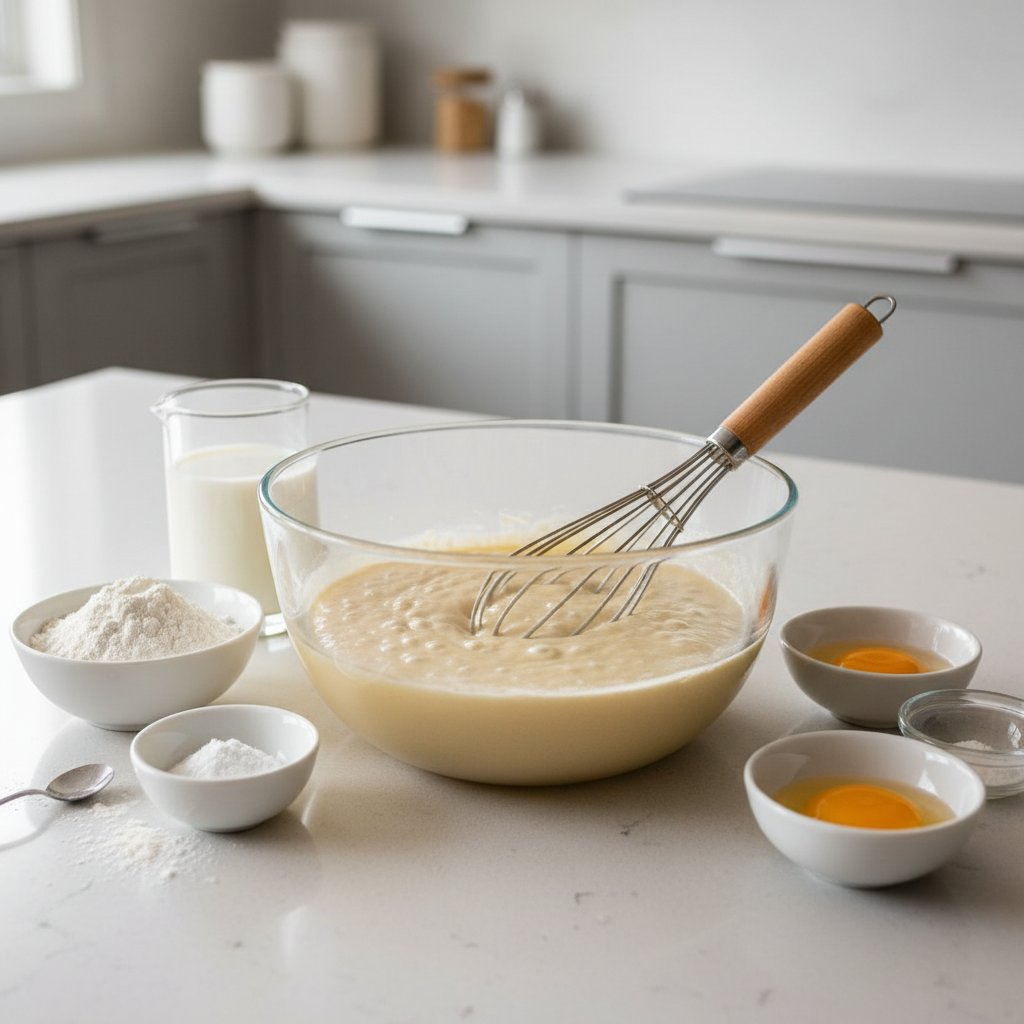
- Mix dry: In a large bowl, whisk flour, sugar, baking powder, and salt until evenly combined.
- Mix wet: In a second bowl, whisk milk, egg, melted butter, and vanilla.
- Combine gently: Pour wet into dry. Stir with a spatula just until no dry pockets remain. Small lumps are a good sign.
- Heat the pan: Warm a nonstick skillet or griddle over medium-low to medium heat. Lightly butter or oil.
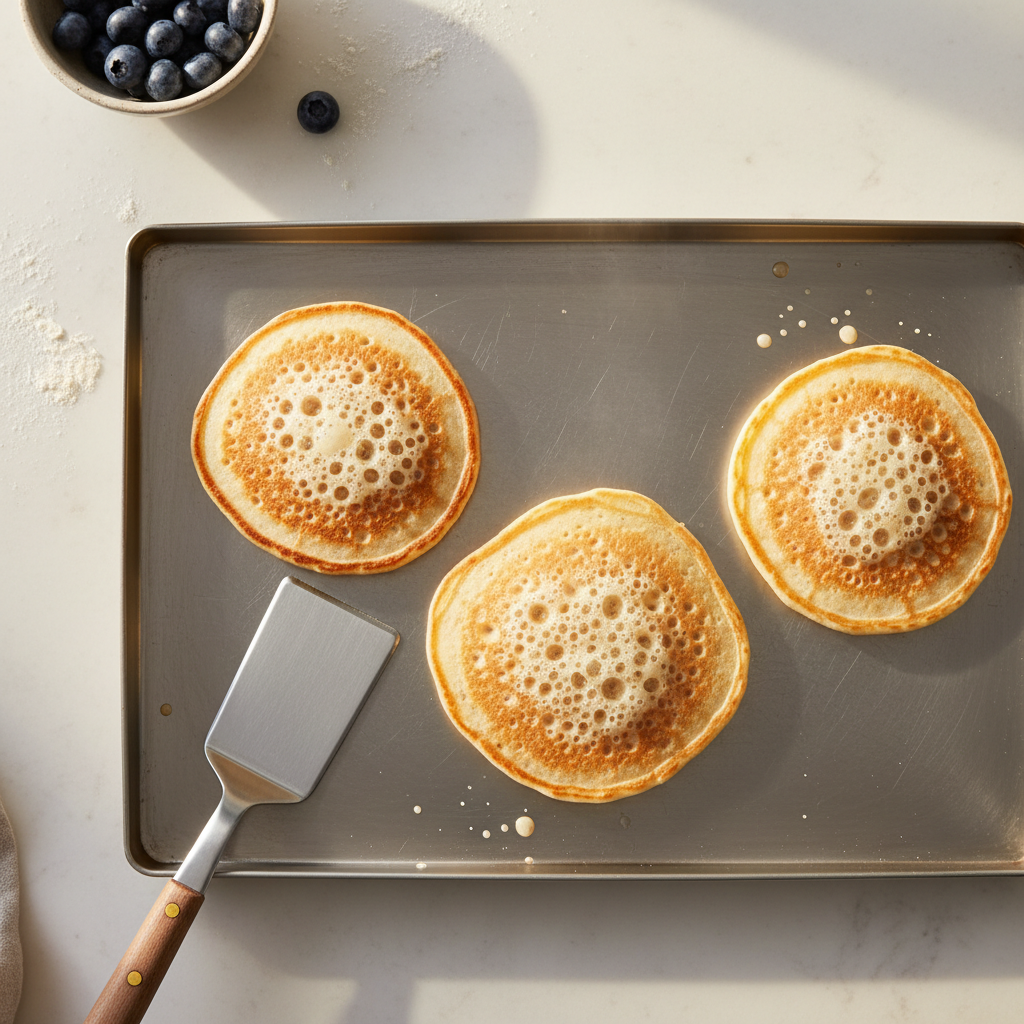
- Cook: Scoop about 1/4 cup batter per pancake. Cook until bubbles appear and edges look set, then flip and cook until golden.
- Serve: Rest pancakes 1–2 minutes so steam finishes the center, then serve warm.
Key point: if the batter seems thick, don’t panic. Thick batter often makes taller pancakes. Add milk 1 tbsp at a time only if it feels like it won’t spread at all.
A fast self-check: why your pancakes aren’t fluffy yet
If your last batch disappointed you, this checklist usually points to the fix in under a minute.
- They’re pale and dry: heat too low, or batter too thin.
- They’re brown outside, raw inside: heat too high, or pancakes too large.
- They’re rubbery: batter mixed too much, or flour overmeasured.
- They don’t rise at all: baking powder may be old, or batter sat too long before cooking.
- They spread into thin crepes: too much liquid, not enough flour, or pan too hot and greasy.
If you’re unsure about baking powder freshness, the common kitchen test is to add a little to hot water and watch for vigorous bubbling. If it barely fizzes, replacing it is usually cheaper than troubleshooting everything else.
Practical tips that make a bigger difference than fancy add-ins
A lot of “secret fluffy pancakes” advice online is really just sugar and extra baking powder. These are the boring moves that actually improve pancakes from scratch, batch after batch.
Measure flour with less guesswork
- Best: use a kitchen scale.
- Good: spoon flour into the measuring cup, then level.
- Avoid: scooping straight from the bag and packing it down.
Control heat like you mean it
- Let the pan preheat 3–5 minutes, then adjust down if the first pancake browns too fast.
- If your kitchen runs hot, medium-low is often the sweet spot.
- Wipe excess butter between batches so you don’t fry the edges.
Timing: mix, then cook
With chemical leavening, batter starts producing bubbles immediately. Mix right before you cook, and avoid letting the bowl sit around while you “get ready.”
Make-ahead, keeping warm, and freezing (without ruining texture)
Fresh off the skillet tastes best, but real mornings get busy. This is how to keep pancakes enjoyable instead of limp.
- Keep warm for a short time: place pancakes on a sheet pan in a 200°F oven. Don’t stack tightly, steam makes them soggy.
- Refrigerate: store cooled pancakes in an airtight container up to a few days.
- Freeze: freeze in a single layer, then bag with parchment between pancakes.
- Reheat: toaster works well for edges; microwave is quick but can soften texture.
According to USDA, reheating leftovers should reach a safe internal temperature in many cases; if you’re serving kids, older adults, or anyone with higher risk, it can be worth being more careful and consulting a professional for personalized food safety guidance.
Common mistakes (the ones people repeat every weekend)
- Pressing pancakes with a spatula: it pushes out the steam that helps keep them tender.
- Flipping too early: wait for bubbles and set edges; otherwise the center tears and spreads.
- Over-greasing the pan: a shiny layer is enough; puddles create fried edges and uneven browning.
- Adding fruit directly to the bowl: berries can bleed and weigh down batter; sprinkle fruit on top after pouring.
Conclusion: the repeatable way to get fluffy pancakes
Once you treat batter gently, keep your leavening fresh, and cook on steadier heat, pancakes from scratch stop feeling like a gamble and start feeling like a weekend default.
Do this next: make one batch exactly as written, then adjust only one variable next time, usually pan heat or batter thickness. That single-change approach gets you to “your” perfect pancake faster than chasing five hacks at once.
FAQ
How do I make pancakes from scratch fluffier without adding more baking powder?
Start with mixing less and measuring flour more accurately. In many kitchens, those two changes add more lift than increasing leavening, which can sometimes leave an odd aftertaste.
Can I use buttermilk in this pancakes from scratch recipe?
Yes. Buttermilk adds tang and tenderness, but it’s more acidic, so some recipes adjust baking soda too. If you swap it in and the batter seems thicker, a small splash of milk usually balances it.
Why are my pancakes raw in the middle?
Most often the pan runs too hot or the pancakes are poured too large. Lower the heat a notch and try smaller circles so the center cooks before the outside over-browns.
Is it okay if pancake batter has lumps?
Usually yes. Small lumps mean you stopped mixing early, which helps keep texture tender. What you want to avoid is dry flour pockets; a few soft lumps are fine.
Can I make the batter the night before?
You can, but results often drop because the leavening does its job while the batter sits. If you need speed, mix dry ingredients ahead, then add wet ingredients in the morning.
What’s the best pan for fluffy pancakes?
A flat griddle or a good nonstick skillet makes consistent contact and even browning. Cast iron can work beautifully too, but it often needs more attention to heat control.
How do I know when to flip pancakes?
Look for bubbles across the surface and edges that look set, not glossy. If your spatula slides under cleanly and the pancake holds together, it’s ready.
Can I make these pancakes from scratch gluten-free?
Sometimes, using a 1:1 gluten-free baking blend works, but brands vary and texture can change. If you have dietary needs or sensitivities, it’s smart to follow a gluten-free recipe designed for that blend or consult a nutrition professional.
If you’re trying to dial in a specific style, extra-thick diner cakes, crispy edges, or a lower-sugar breakfast, share what you’re aiming for and what pan you use, and I can help you tweak this base without turning it into guesswork.