
How to make tea perfect hot cup usually comes down to three things most people rush: water temperature, steep time, and the tea-to-water ratio.
If your tea tastes bitter, flat, or weirdly “thin,” it’s rarely the tea brand’s fault. More often it’s boiling water on delicate leaves, leaving the bag in too long, or using a mug that cools down fast so extraction turns inconsistent.
This guide gives you a practical path: quick rules you can remember, a table you can screenshot, and a few small upgrades (no fancy gear required) that make a noticeable difference.
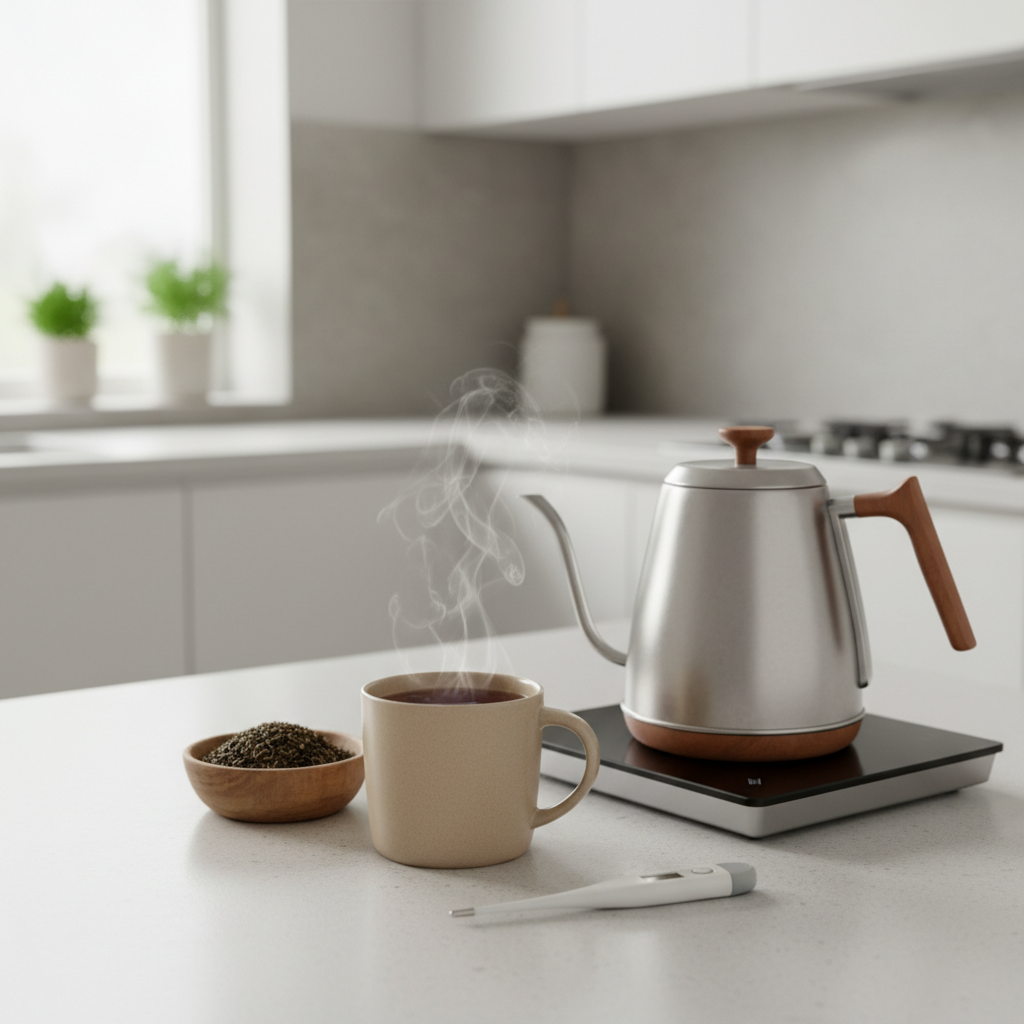
Start with the basics: what “perfect” tea actually means
“Perfect” isn’t one universal flavor. For most people, it means the cup tastes balanced: aroma comes through, body feels present, and there’s no harsh bitterness lingering at the back of your tongue.
Tea brewing is extraction. Hot water pulls out compounds from leaves, some are sweet and aromatic, some are astringent and drying. If you extract too aggressively, the cup turns sharp. If you under-extract, it tastes watery.
According to the UK Tea & Infusions Association (UKTIA) guidance commonly shared for everyday brewing, water temperature and brew time should match tea type, which is a simple way to avoid overdoing it.
The “Big 3” variables: temperature, time, and ratio
When people ask how to make tea perfect hot cup, these three variables decide 90% of the result, even before you get into fancy teaware.
1) Water temperature
Boiling water is not always your friend. It works for many black teas, but green and white teas often taste better with cooler water because their tender leaves release bitterness faster.
- Too hot: bitter, drying, “burnt” aromatics
- Too cool: weak flavor, dull aroma
2) Steep time
Time is your bitterness dial. A lot of “tea is bitter” problems come from leaving the bag in while you answer a text, then forgetting it.
- Shorter steep: lighter, sometimes sweeter
- Longer steep: stronger, but risk of harshness
3) Tea-to-water ratio
If you use too little tea, you’ll compensate by steeping longer, which can make the cup both weak and bitter. Better approach: increase tea amount slightly, keep time reasonable.
- For loose leaf: a common starting point is 1 teaspoon per 8 oz, adjusted by leaf size and style
- For tea bags: 1 bag per 8–10 oz usually brews more evenly than stretching one bag across a giant mug
Brewing table: quick settings by tea type
Use this as a baseline, then adjust based on taste. If you prefer stronger tea, increase tea amount a touch before extending time.
| Tea type | Water temp (°F) | Steep time | Notes |
|---|---|---|---|
| Black tea | 200–212 | 3–5 min | Great with milk; bitterness rises fast after 5 min |
| Green tea | 160–180 | 1–3 min | Cooler water keeps it smooth and less astringent |
| White tea | 170–190 | 2–4 min | Gentle extraction, focus on aroma |
| Oolong | 185–205 | 2–5 min | Wide range; lighter oolongs like cooler temps |
| Herbal (tisanes) | 205–212 | 5–8 min | Usually handles boiling; longer steep brings body |
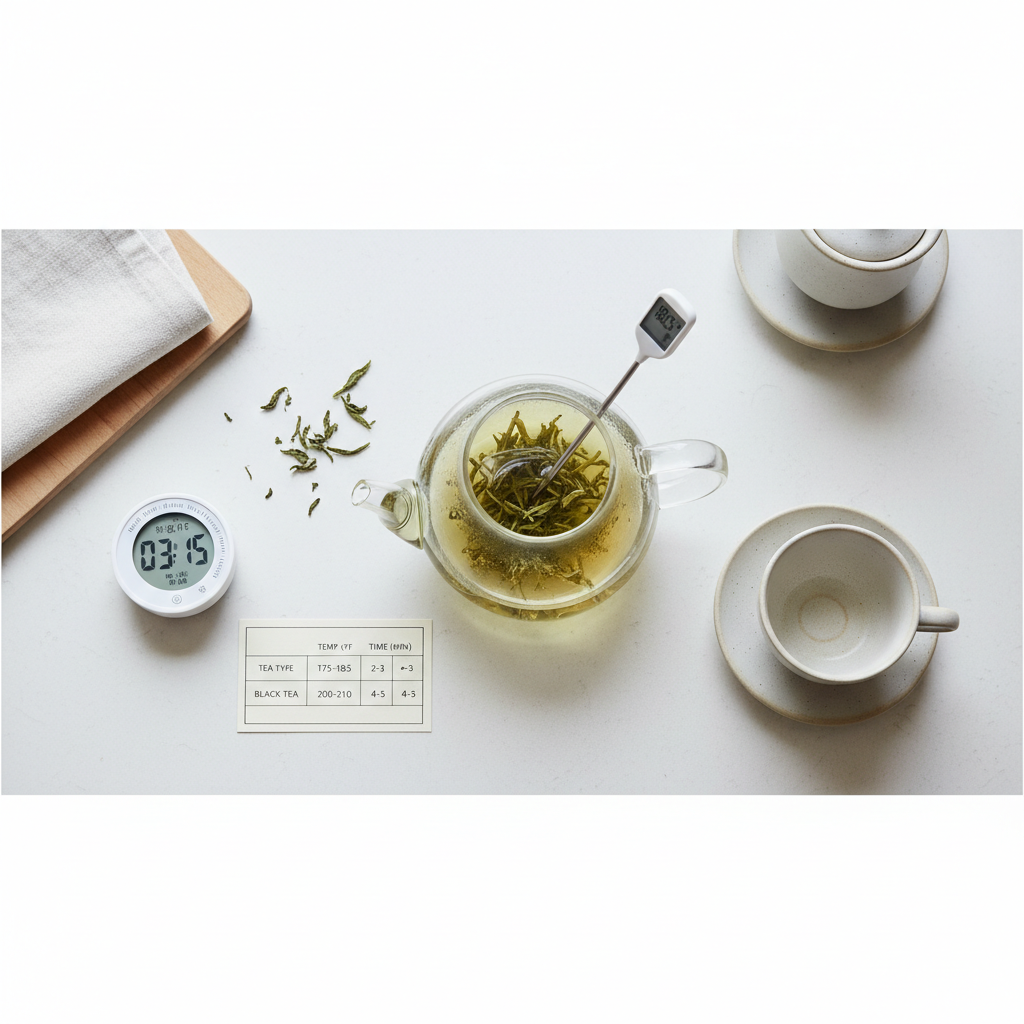
Step-by-step: a reliable method for a perfect hot cup
This is the repeatable routine that keeps you out of the “too bitter / too weak” loop.
Step 1: Use fresh, cold water
Fresh water generally tastes cleaner. If your tap water has strong chlorine or mineral notes, a basic carbon filter can help more than upgrading your tea.
Step 2: Preheat the mug or teapot
Swirl a little hot water in the mug, dump it, then brew. This keeps temperature stable, especially in thick ceramic that steals heat early.
Step 3: Measure tea, then set a timer
Eyeballing works until it doesn’t. A teaspoon and a phone timer keep your cup consistent, which is the real secret behind “perfect.”
- Loose leaf: start at 1 tsp per 8 oz
- Tea bags: 1 bag per 8–10 oz, don’t oversize your mug
Step 4: Match water temp to tea type
No thermometer? A practical shortcut: after boiling, let the kettle sit uncovered 5–8 minutes for greener teas, less time for oolong, and pour near-boiling for black tea and most herbals. It’s not lab-precise, but it gets you close.
Step 5: Steep, then remove the leaves
Once it hits your time window, remove the bag/infuser. Leaving tea in “just while I drink it” is a classic way to over-extract.
Troubleshooting: fix common flavor problems fast
If you’re trying how to make tea perfect hot cup and you keep missing, use taste as your compass and adjust one variable at a time.
Your tea tastes bitter or drying
- Lower water temperature, especially for green/white tea
- Shorten steep time by 30–60 seconds
- Use a little more tea instead of longer steeping
Your tea tastes weak or watery
- Increase tea amount slightly
- Make sure the water is hot enough for the tea type
- Preheat your mug so heat doesn’t drop immediately
Your tea tastes “flat” even when strong
- Check water quality, heavy minerals can mute aroma
- Try a different tea style, some bags are blended for milk/sugar
- Don’t squeeze the tea bag hard, it can push out harsher notes
Small upgrades that actually matter (without turning it into a hobby)
You can make a great cup with a kettle and a mug. Still, a couple of low-effort changes tend to pay off.
- Electric kettle with temperature control: makes green tea easier and more repeatable
- Simple infuser basket: gives leaves room to expand, often improving flavor
- Kitchen scale: if you want consistency, weighing tea beats guessing
One more practical note: tea stales. If your loose leaf smells faint or dusty, the “perfect” technique can only do so much. Store tea sealed, away from heat and strong kitchen odors.
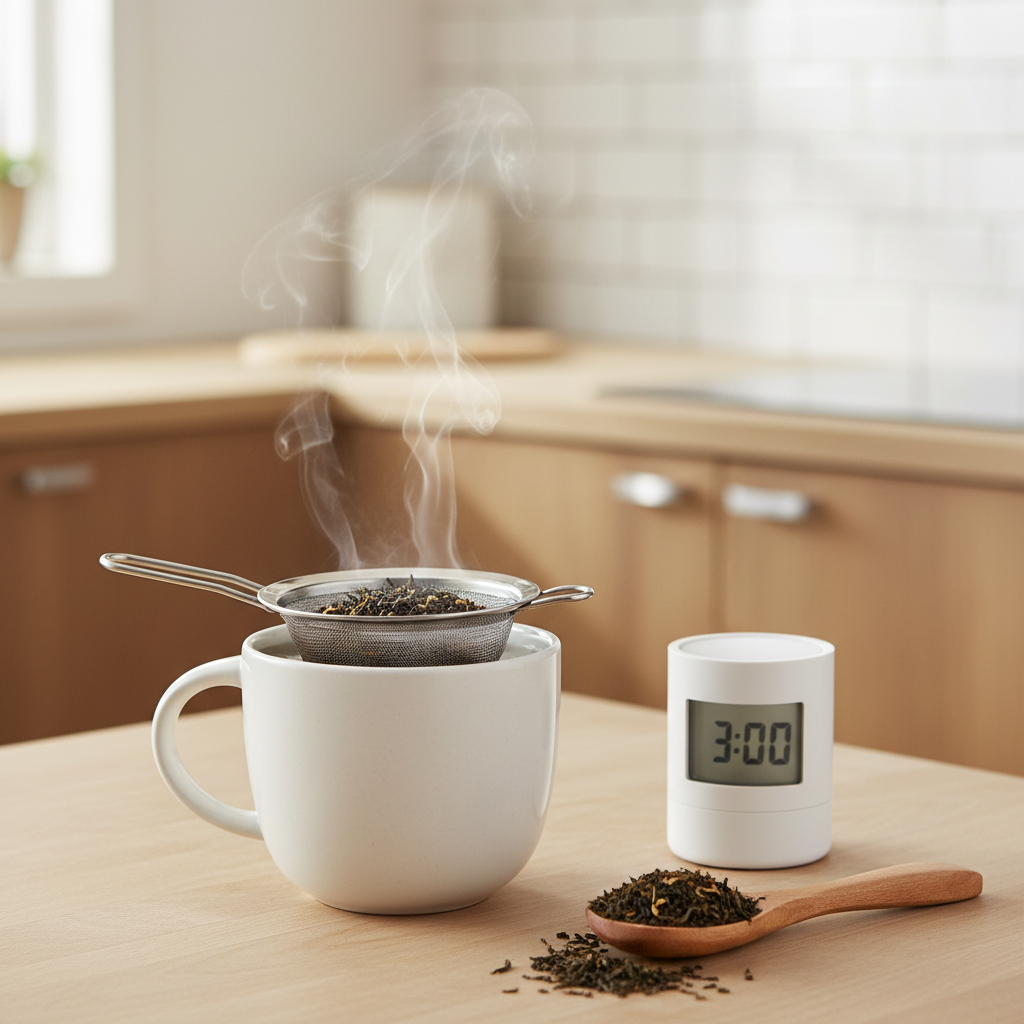
Key takeaways (save this for later)
- Match temperature to tea type, boiling water isn’t universal
- Set a timer, most bitterness comes from “just a little longer”
- Fix weak tea by increasing tea amount, not by steeping forever
- Preheat your mug if your tea cools down fast and tastes uneven
Safety and health notes (quick, but worth reading)
Tea is widely consumed, but caffeine sensitivity varies. If you’re sensitive to caffeine, pregnant, or managing a medical condition, it’s smart to choose lower-caffeine options and consider asking a healthcare professional about what fits your situation.
Also, be careful with very hot liquids. Let tea cool slightly before drinking to avoid burns.
Conclusion: make it repeatable, then make it yours
Once you control temperature, time, and ratio, how to make tea perfect hot cup stops being a mystery and starts feeling like muscle memory. Brew a few cups with a timer, adjust in small steps, and you’ll land on a version that fits your taste instead of someone else’s rules.
If you want an easy next step, pick one tea you drink often, follow the table for a week, and write down one tweak each day, your “perfect” cup shows up faster than you think.