
How to make scrambled eggs fluffy usually comes down to three things most people rush past, gentle heat, smart whisking, and knowing when to stop cooking.
If your eggs turn out dry, rubbery, or oddly watery, it’s rarely “bad eggs” and more often a timing and temperature problem. The good news is you don’t need fancy gear, you need a repeatable method and a couple of small habits.
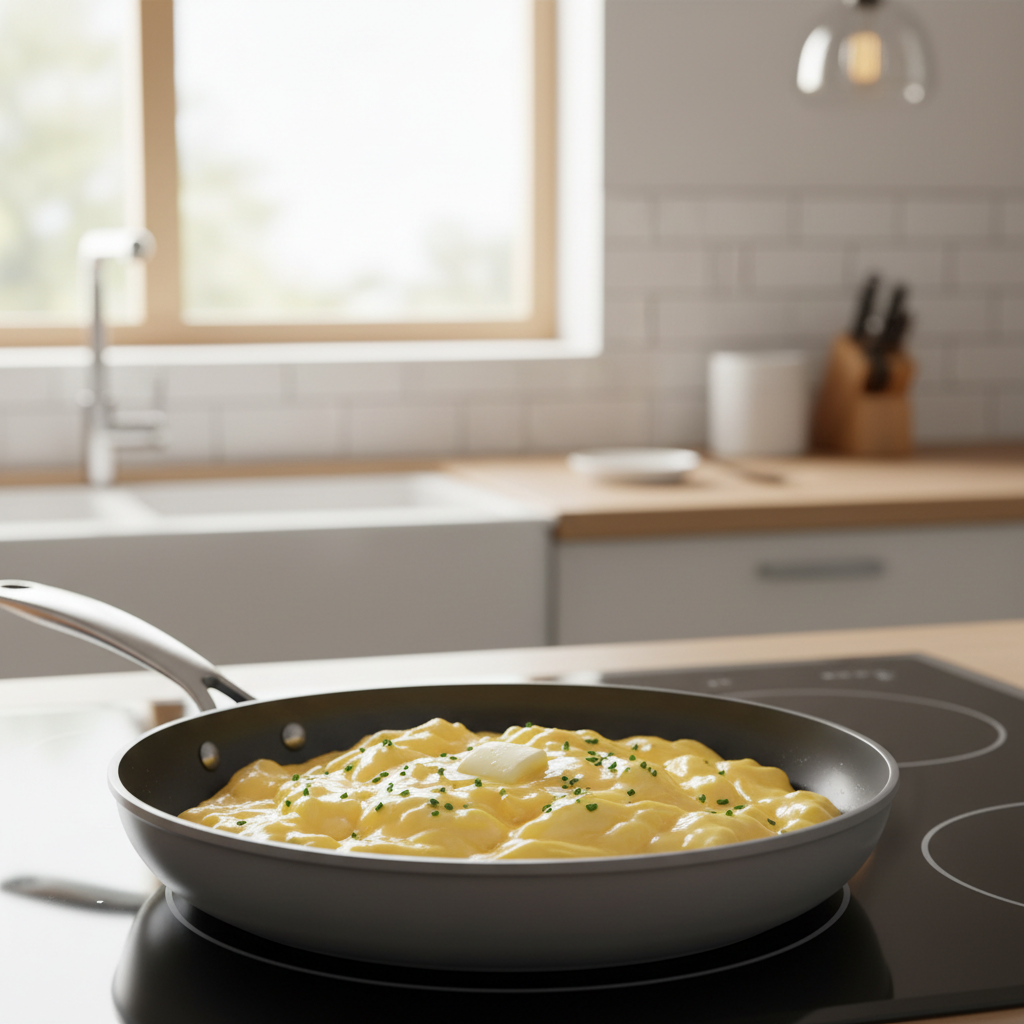
I’ll walk you through what actually creates lift and tenderness, how to adjust for your pan and stove, and the common “looks right but tastes wrong” mistakes. You’ll also get a quick checklist and a small troubleshooting table you can save.
What “fluffy” scrambled eggs really means
People use fluffy to describe a few different textures, so it helps to pick your target. In practice, you’re aiming for eggs that feel light on the fork, with curds that hold shape but stay moist.
- Fluffy and airy: bigger curds, less dense bite, still tender.
- Soft and creamy: smaller curds, more custardy, not runny.
- Dry “diner style”: firm curds, often overcooked at home by accident.
Most home cooks miss fluffy because they cook too hot and too long, which squeezes out moisture and tightens the proteins. That tightening is what turns “light” into “bouncy.”
Why scrambled eggs turn flat, watery, or rubbery
To get how to make scrambled eggs fluffy, it helps to know what’s working against you. Eggs are mostly water and protein, and proteins set fast when heat spikes.
- Heat too high: outside sets before you can form curds, then you keep cooking and they dry out.
- Cooking past the finish line: eggs keep cooking from residual heat, especially in stainless or cast iron.
- Over-whisking at the wrong time: you can beat in air, but if you then blast high heat, the structure collapses and toughens.
- Salt timing confusion: salting early can sometimes make eggs look “wet” in the bowl, but that’s not automatically bad, it depends on time and technique.
- Too much liquid add-in: milk or water can dilute and increase weeping if heat is high or cook time drags.
According to USDA Food Safety and Inspection Service (USDA FSIS), eggs should be cooked until the whites and yolks are firm, and egg dishes should reach 160°F for food safety. You can still get tender curds while hitting that temperature, but it pushes you toward controlled heat and quick carryover.
Quick self-check: which situation are you in?
Before changing anything, pinpoint the failure mode. Pick the closest description.
- Dry and crumbly: pan too hot, cooked too long, or too much stirring late in the cook.
- Rubbery, squeaky bite: prolonged heat exposure, often from “just one more minute.”
- Watery puddle on the plate: low heat but long cook, or add-ins released water, or eggs sat too long before serving.
- Thin, flat layer instead of curds: not enough fat, too wide a pan for your batch, or you spread them and never let curds form.
If you’re consistently close-but-not-there, your stove’s “medium” may run hot. A lot of fluffy-eggs success is simply calibrating that one knob.
The core method: fluffy scrambled eggs, step by step
This method leans “soft-fluffy” rather than French-style custardy. It works with a nonstick skillet and a silicone spatula, and it scales well.
Ingredients (for 2 servings)
- 4 large eggs
- 1 to 2 tbsp butter
- Salt and pepper
- Optional: 1 tbsp crème fraîche or sour cream, or a small sprinkle of shredded cheese
Technique
- Whisk with intention: Beat eggs until yolks and whites fully blend and look slightly frothy, about 20 to 30 seconds. You want some air, not a foam party.
- Preheat gently: Warm the pan over medium-low, then melt butter until it looks glossy and just starts to bubble.
- Pour and pause: Add eggs, let them sit for a few seconds until you see the edges begin to set.
- Push, don’t shred: Use a spatula to push eggs from the edge toward the center, forming soft folds. Rotate the pan as you go.
- Kill heat early: When eggs are mostly set but still look a little shiny, turn off the burner. Keep folding for 10 to 20 seconds with the residual heat.
- Season at the end if you like: Salt and pepper, then serve immediately.
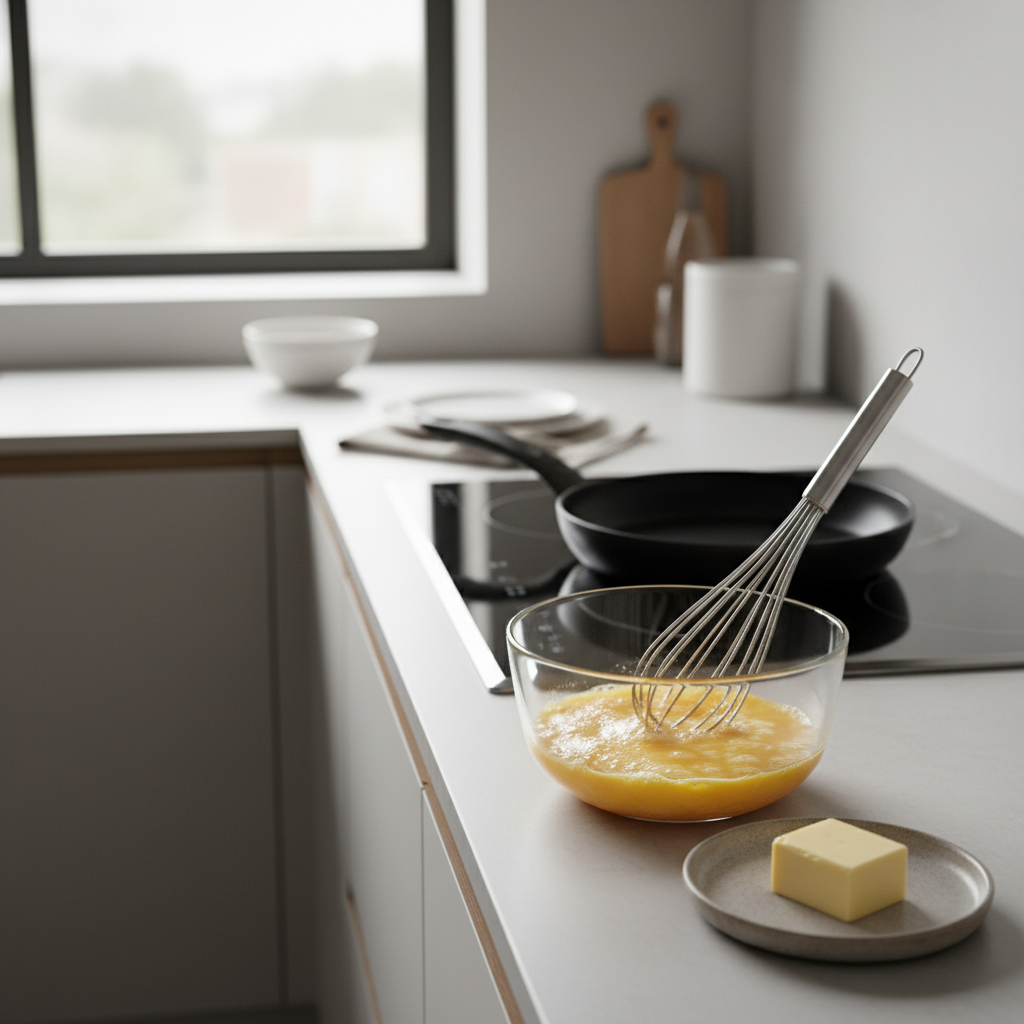
Key idea: you’re creating curds, then stopping while they still look slightly underdone. That “last bit” finishes on the plate, not on the burner.
Small tweaks that make a big difference (heat, fat, whisking)
If you already know the basics, these tweaks usually separate “fine” from “wow, that’s fluffy.”
Heat control: your real secret
- Medium-low beats medium-high in many home kitchens, because eggs set fast.
- If butter browns before eggs hit the pan, you’re too hot for fluffy curds.
- On electric coils, consider pulling the pan off heat for a few seconds if curds set too quickly.
Fat: more than flavor
- Butter helps curds slide and stay tender; too little can encourage sticking and over-stirring.
- Olive oil works, but tends to produce a slightly “tighter” scramble unless you keep heat very gentle.
Whisking: when “more” becomes pointless
- Fully blending eggs matters more than aggressive beating.
- If you want extra lift, whisk vigorously for 30 seconds and cook a touch lower, so the air has time to expand before proteins tighten.
And yes, the question comes up: milk vs no milk. A splash can soften texture, but too much often backfires, especially on higher heat. If you want richness without watery runoff, a spoon of crème fraîche or sour cream tends to behave better.
Troubleshooting table: fix the batch you keep making
When you’re trying to dial in how to make scrambled eggs fluffy, this kind of quick mapping saves time, because you change one variable instead of five.
| Problem | Likely cause | What to do next time |
|---|---|---|
| Dry, crumbly curds | Heat too high or cooked too long | Drop to medium-low, turn off earlier, serve right away |
| Rubbery texture | Pan stayed on heat after set | Use carryover cooking, fold off-heat for 10–20 seconds |
| Watery on plate | Too much added liquid or wet add-ins | Skip milk, pre-cook mushrooms/spinach, drain salsa |
| Sticks to pan | Pan too hot, not enough fat, wrong pan | Use nonstick, add butter, lower heat, avoid metal utensils |
| Thin omelet-like layer | Pan too large for egg count | Use smaller skillet or increase eggs |
Add-ins and serving timing: where fluffiness gets lost
You can do everything right and still end up disappointed if add-ins dump water or if the eggs sit. Scrambled eggs have a short “perfect window.”
- Pre-cook watery vegetables: mushrooms, zucchini, spinach, tomatoes, even salsa. Cook, season, and let steam escape.
- Add cheese late: fold in when eggs are almost done so it melts without turning the whole pan into glue.
- Warm your plate: not scorching hot, just not cold. A cold plate can cool eggs fast and make texture feel denser.
- Serve immediately: letting eggs sit in a hot pan is basically slow overcooking.
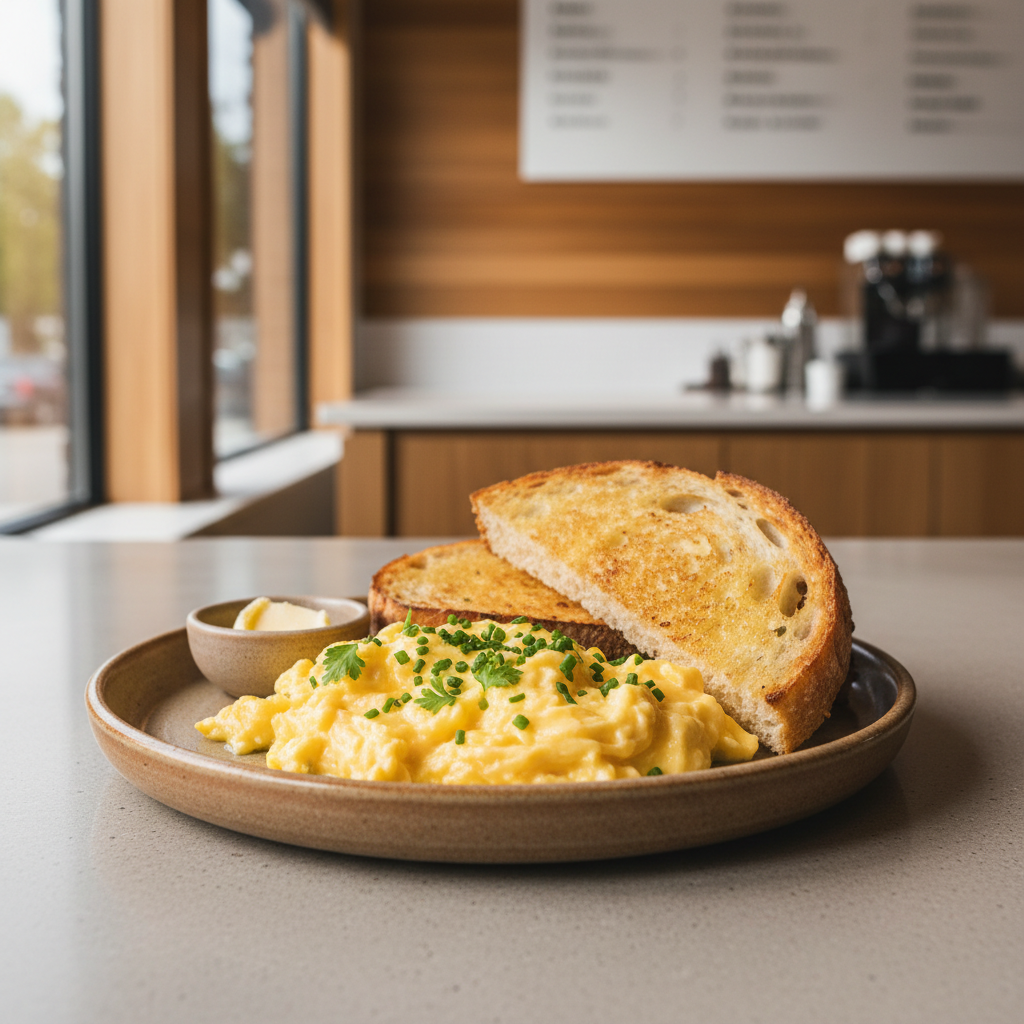
If you meal prep, consider cooking eggs slightly under and reheating gently, but know the texture will usually shift. For truly fluffy results, fresh-cooked wins.
Key takeaways and a simple “next time” plan
If you remember one thing, remember this: fluffy eggs come from controlled heat and stopping early. Everything else is a helper.
- Use medium-low heat and let curds form instead of blasting the pan.
- Fold gently to build larger, lighter curds.
- Turn off heat while eggs look slightly glossy, carryover finishes the job.
- Limit watery add-ins unless you pre-cook them.
Next time you cook, change just two things, lower the heat one notch and pull the pan off the burner 30 seconds earlier than you think. If you like what you get, lock that in as your default and only then start experimenting with add-ins.
FAQ
How do I make scrambled eggs fluffy without milk?
You don’t need milk for lift. Whisk until fully blended and slightly frothy, cook over medium-low, and stop early so carryover heat sets the last bit without drying.
Does adding water make scrambled eggs fluffier?
A small splash can create steam and slightly lighter curds, but it also raises the risk of watery eggs if heat is high or cooking runs long. If you try it, keep it minimal and lower the heat.
When should I salt eggs for fluffy scrambled eggs?
Both can work. Salting right before cooking keeps the mixture looking “clean,” while salting a few minutes ahead can help seasoning penetrate. If you notice extra liquid in the bowl, shorten the wait time and avoid adding milk.
What pan is best for fluffy scrambled eggs?
Nonstick is the easiest path because you can fold gently without scraping. Stainless can work, but it punishes high heat and needs more attention to fat and timing.
How do restaurants make scrambled eggs so light?
Many places use lower heat than you’d expect, cook in batches, and move fast at the end. Some also add richer dairy, but the texture usually comes more from temperature control than from a “secret ingredient.”
Why are my scrambled eggs watery even when I cook longer?
Cooking longer often makes it worse because proteins tighten and squeeze out moisture. Cut back on liquid add-ins, pre-cook vegetables, and finish earlier with gentle heat.
Can I make fluffy scrambled eggs in the microwave?
You can get decent results, but texture is less forgiving. Use a microwave-safe bowl, short bursts, and stir between rounds to avoid tough edges, and stop while still slightly glossy.
If you’re trying to make weekday breakfasts easier, it can help to write down your exact pan size, burner setting, and timing the first time you nail it, those small notes make fluffy eggs repeatable instead of random.