
best gyoza recipe fried steamed easy is usually what people mean when they want two things at once: a shatter-crisp bottom and a juicy, steamed interior, without turning dinner into an all-day project.
If you have ever ended up with gyoza that stick to the pan, tear while flipping, or taste a little flat, it is rarely your “recipe” and more often your setup: moisture balance in the filling, heat control, and timing the steam.
This guide stays practical, the kind of method you can repeat on a Tuesday. You will get a reliable filling formula, two wrapper options, a pan-fry-then-steam technique, and quick fixes for the common “why did mine do that” moments.
What makes gyoza “the best” for most home cooks
In restaurant kitchens, gyoza quality comes from repetition and heat discipline. At home, “best” usually means a few measurable outcomes you can control.
- Crisp base without burning, so you taste toasted wrapper, not bitterness.
- Juicy center, which depends on fat content and not overcooking.
- Clean, savory flavor, where garlic and ginger support rather than shout.
- Repeatable process, meaning the recipe tolerates small mistakes.
Many people chase crispness by blasting the heat, then wonder why the filling dries out. The “fried steamed” approach solves that, you brown first, then steam to finish gently.
Ingredients: simple list, picky details
Good gyoza is forgiving, but a couple ingredients matter more than others, especially if you want that weeknight-friendly, best gyoza recipe fried steamed easy vibe.
Filling (makes about 30 gyoza)
- 1 lb ground pork (80/20 is a safe range), or ground chicken thigh
- 2 cups napa cabbage, finely chopped
- 2 tsp kosher salt (for salting cabbage)
- 3 scallions, thinly sliced
- 2 cloves garlic, grated
- 1 tbsp ginger, grated
- 1 tbsp soy sauce
- 1 tbsp toasted sesame oil
- 1 tbsp sake or dry sherry (optional, helps aroma)
- 1 tsp sugar
- 1/2 tsp white pepper or black pepper
Wrappers and sealing
- 30 round gyoza wrappers (store-bought), or thin round dumpling wrappers
- Small bowl of water for sealing
For cooking (per batch of 10)
- 1 tbsp neutral oil (canola, avocado)
- 1/4 cup water (for steaming)
- 1 tsp toasted sesame oil (optional finish)
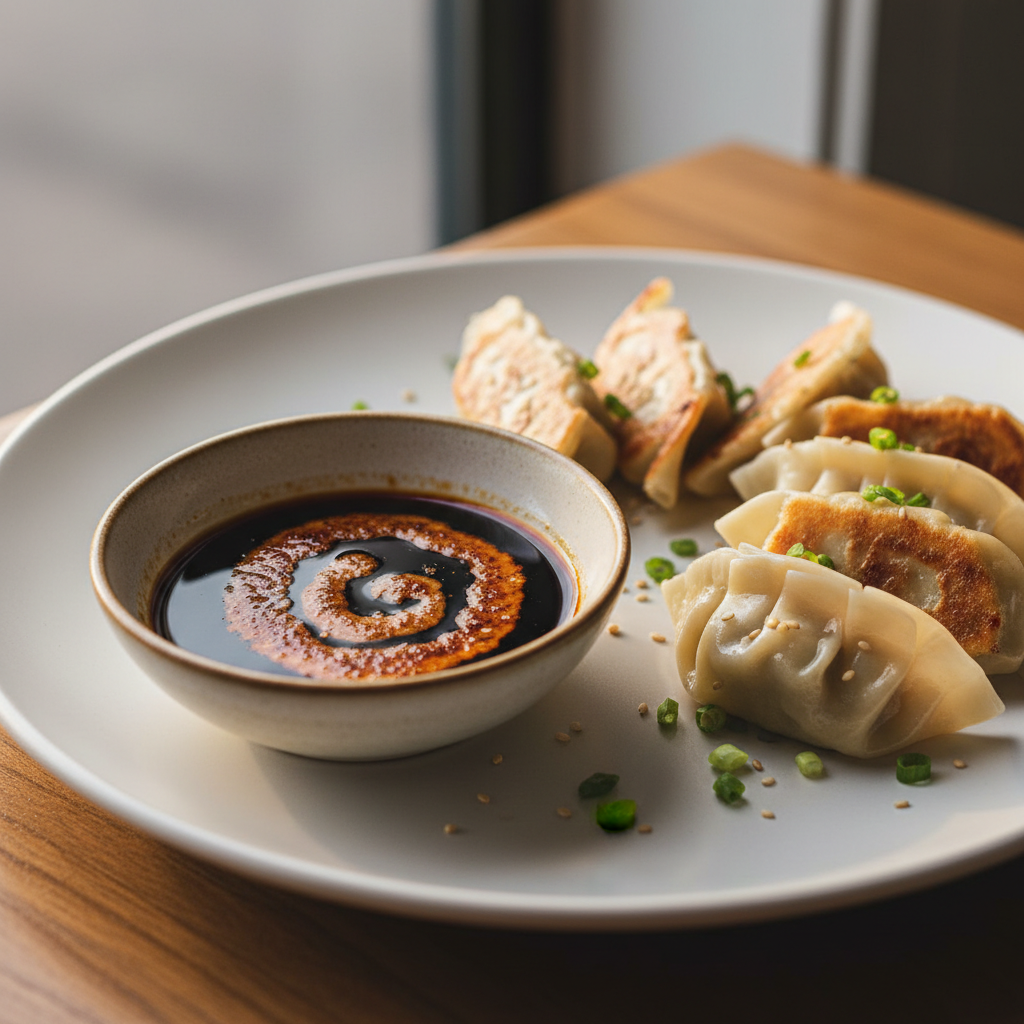
Quick dipping sauce
- 2 tbsp soy sauce
- 1 tbsp rice vinegar
- Chili crisp or chili oil to taste
According to USDA Food Safety and Inspection Service (USDA FSIS), ground meats should be cooked to safe internal temperatures, and using a thermometer is the most reliable approach. For pork and other ground meats, follow current USDA guidance for doneness rather than guessing by color.
Step-by-step: pan-fried then steamed (the repeatable method)
This is the core workflow that makes the texture work. Once you do it twice, it feels almost automatic.
1) Prep the cabbage so the filling stays juicy, not watery
- Chop napa cabbage finely, toss with salt, rest 10 minutes.
- Squeeze hard to remove moisture, then fluff it back up.
This one step prevents the “wet filling, torn wrapper” spiral.
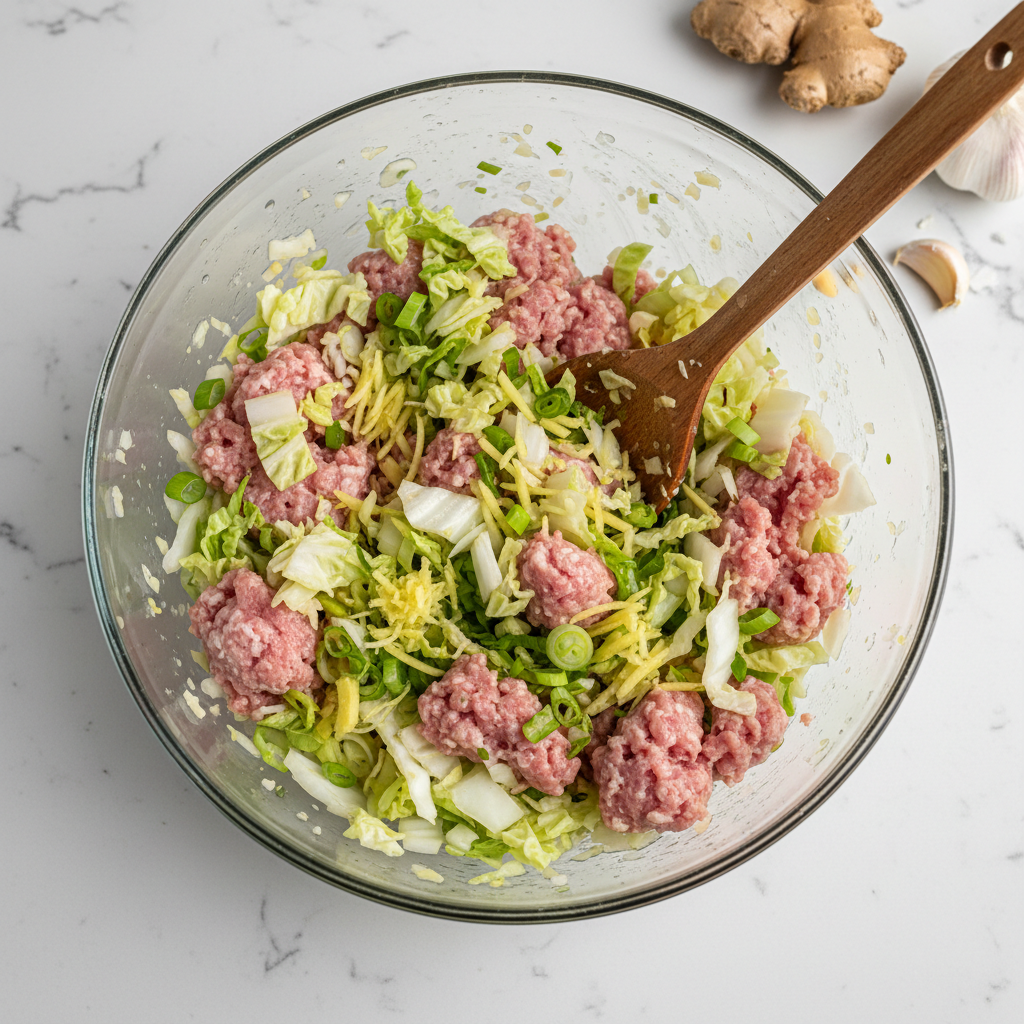
2) Mix filling until it gets tacky
- Combine pork, cabbage, scallions, garlic, ginger, soy sauce, sesame oil, sake, sugar, pepper.
- Stir in one direction for 30 to 60 seconds until it looks slightly sticky.
Tacky mixture binds better and leaks less during steaming.
3) Fill and fold without overstuffing
- Place 1 heaping teaspoon filling in the center of a wrapper.
- Wet half the edge with water, fold into a half-moon.
- Pleat if you like, but a simple press-seal also works if the edge is clean.
If you feel tempted to add more filling, resist, too much makes sealing harder and causes blowouts.
4) Fry, then steam, then dry
- Heat a nonstick or well-seasoned skillet over medium-high, add oil.
- Arrange gyoza flat-side down, cook 2 to 3 minutes until golden.
- Add water, cover immediately, reduce to medium, steam 3 to 5 minutes.
- Uncover, cook 1 to 2 minutes to evaporate remaining water and re-crisp bottoms.
That last “dry” phase is where home cooks often stop early. Give it a minute and listen for a gentle sizzle returning.
“Easy” doesn’t mean bland: flavor tweaks that actually matter
Once the technique is solid, flavor is the fun part. Keep it realistic though, gyoza tastes best when the filling stays balanced.
- More savory: add 1 to 2 tsp miso, reduce soy slightly.
- More aromatic: increase ginger, not garlic, ginger lifts without turning harsh.
- More juicy: mix in 1 tbsp neutral oil or a spoon of chicken stock, but only if your cabbage is well-squeezed.
- More veggie-forward: swap in minced mushrooms, but sauté and cool them first to avoid extra moisture.
If your goal is the best gyoza recipe fried steamed easy for a crowd, keep one “classic” batch before experimenting, people like a familiar baseline.
Troubleshooting: why your gyoza stick, tear, or turn soggy
Most gyoza problems trace back to three things: moisture, heat, and pan surface. Here is the quick diagnosis list.
- Sticking to the pan: pan not hot before adding oil, or using stainless without enough seasoning; try nonstick, or preheat longer and use slightly more oil.
- Tearing at the seam: overfilled wrappers, dry edges, or cabbage not squeezed; reduce filling and keep wrappers covered with a damp towel.
- Soggy bottoms: skipping the final uncovered “dry” phase; cook uncovered until the sizzling sound returns.
- Filling tastes flat: not enough salt in the mix, or too much cabbage relative to meat; add a pinch of salt to the filling, not more soy by default.
- Burnt bottoms, undercooked center: heat too high; medium-high for browning, then medium for steam tends to behave better.
Time-saving options: frozen, make-ahead, and the “skirt” trick
If you want this to stay easy, you need a strategy for weeknights.
Make-ahead and freezing
- Freeze uncooked gyoza on a sheet pan until firm, then bag.
- Cook from frozen the same way, add 1 to 2 minutes to the steam step.
Do not thaw first, thawing tends to create leaks and sticky wrappers.
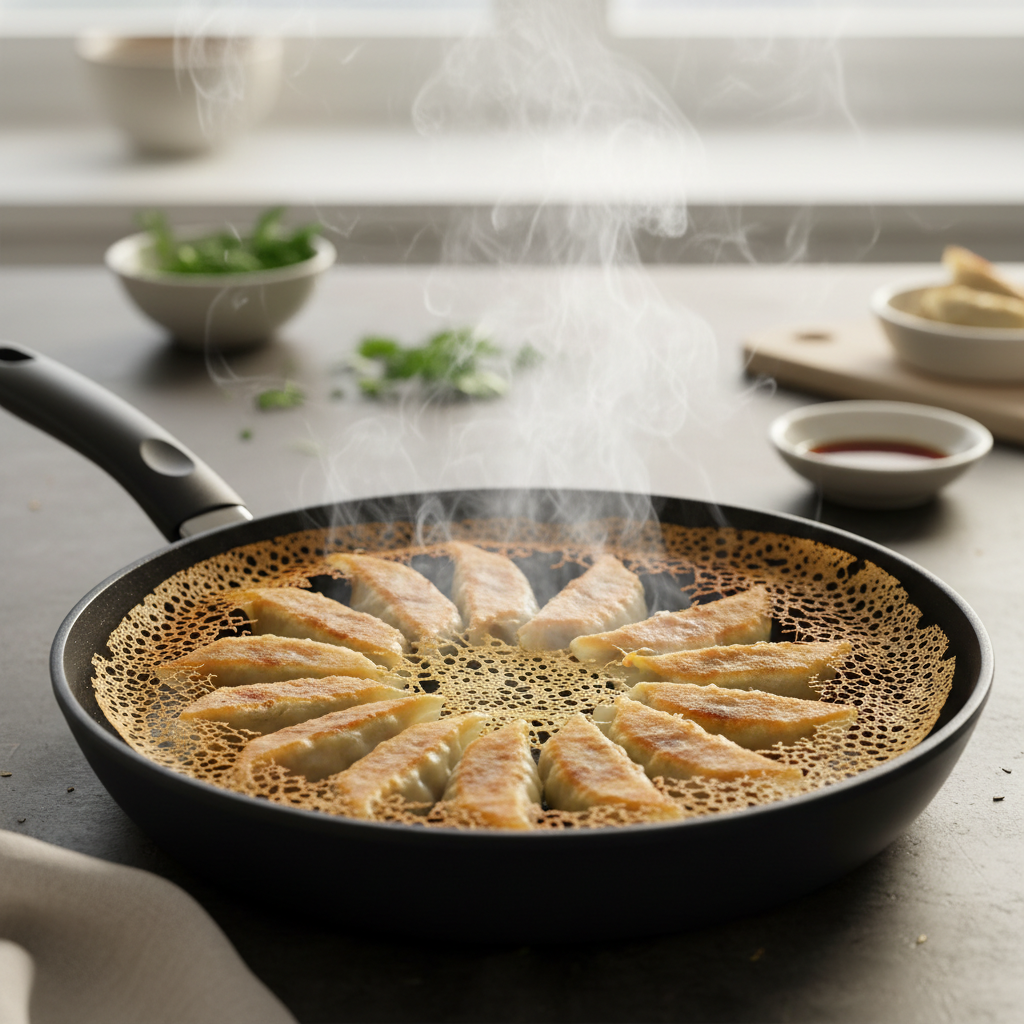
Optional: crispy lace “skirt” (restaurant look, still doable)
Mix 1 tsp all-purpose flour or potato starch with 1/3 cup water, use it instead of plain water for the steam step. When it dries, it forms a lacy sheet that connects the dumplings.
It looks dramatic, but it can burn if the heat stays too high, so keep your ear on that sizzle.
Quick reference table: cook times, heat, and batch size
This is the “look it up mid-cooking” section.
| Stage | Heat | Time (fresh) | What you’re looking for |
|---|---|---|---|
| Brown | Medium-high | 2–3 min | Golden bottoms, wrappers set |
| Steam (covered) | Medium | 3–5 min | Wrappers slightly translucent, center cooked |
| Dry/crisp (uncovered) | Medium | 1–2 min | Water gone, sizzling returns |
| Steam from frozen | Medium | 5–7 min | No raw center, steady steam |
Key takeaways (so you remember the parts that matter)
- Salt and squeeze cabbage to avoid watery filling and ripped seams.
- Brown first, steam second for crispy bottoms and juicy centers.
- Uncover to dry or you will keep the bottoms soft.
- Do not overfill, a teaspoon goes farther than you think.
- Cook ground meat safely, use a thermometer if you feel unsure.
Conclusion: your next batch should be boring in the best way
Once you lock in the salt-squeeze step and the fry-steam-dry rhythm, gyoza stops feeling finicky. That is the real point of a best gyoza recipe fried steamed easy approach, you get consistent texture without needing perfect pleats or special gear.
Next time, make a double batch and freeze half, then you have a fast dinner that still feels like you tried. If you want, keep the dipping sauce simple, taste one dumpling, then adjust with vinegar or chili from there.
FAQ
- Can I use store-bought wrappers for the best easy fried gyoza?
Yes, and many home cooks prefer them for consistency. Keep wrappers covered so edges do not dry out, sealing gets much easier. - Why do my gyoza burst during steaming?
Most of the time it is overfilling or a weak seal. Use less filling, press out air pockets, and make sure the rim is clean before sealing. - What pan works best for fried-steamed gyoza?
Nonstick is the lowest-stress option. If you use stainless, preheat well and accept that you may need a touch more oil and patience. - How do I know the filling is fully cooked without cutting one open?
A thermometer removes guesswork, especially for ground meat. If you do not have one, cook one dumpling as a tester early, then match timing for the rest. - Can I make this gyoza recipe with chicken or turkey?
Usually yes, but choose darker meat if possible because very lean poultry dries faster. A small spoon of oil in the mix can help if it tastes dry. - How do I keep gyoza crispy after cooking?
They crisp best right before eating. If holding for a few minutes, keep them uncovered on a rack, covering traps steam and softens the bottoms. - What is the easiest dipping sauce for gyoza?
Soy sauce plus rice vinegar is the classic baseline. Add chili crisp if you want heat, but start small so it does not drown the filling.
If you are cooking for a group or just want fewer moving parts, consider prepping and freezing the dumplings on a weekend, then your weeknight “fried then steamed” batch becomes mostly a timing exercise, not a big cooking project.