
how to make fried rice at home is mostly about getting the texture right and not overthinking the sauce, once those two click, the whole dish becomes weeknight-easy and surprisingly consistent.
If your fried rice keeps turning out mushy, bland, or weirdly watery, it’s rarely your “recipe” and usually your setup, the rice, the pan heat, and when you add moisture. Fix those and even basic ingredients taste like you meant it.
This guide focuses on the practical stuff people skip, what rice works, what to prep before the heat goes on, and how to build flavor without drowning everything in soy sauce. You’ll also get a quick troubleshooting checklist and a simple “choose-your-own” flavor table.
What Usually Makes Homemade Fried Rice “Hard”
People blame technique, but the common failure points are more boring than that, and that’s good news because they’re easy to correct.
- Rice too wet: fresh rice steams in the pan, then clumps and goes soft.
- Pan not hot enough: you get pale rice and limp vegetables instead of a little toast and aroma.
- Overcrowding: a full skillet traps steam, which fights browning.
- Sauce too early: liquids hit the rice before it firms up, then everything tastes salty but flat.
- Skipping prep: fried rice cooks fast, if you chop while cooking, something burns or turns soggy.
One more thing people don’t love hearing, your stove matters. A home electric coil can still make great fried rice, you just need smaller batches and a bit more patience with preheating.
Rice: The One Choice That Changes Everything
If you want to know how to make fried rice at home without stress, start with rice that can stay separate under high heat. Day-old rice is popular for a reason, it dries out and firms up.
Best options (from easiest to most “ideal”)
- Cold leftover rice (1–3 days): break it up with clean hands or a fork before cooking.
- Fresh rice, cooled fast: spread on a sheet pan, refrigerate uncovered 30–60 minutes so steam escapes.
- Microwave pouch rice: surprisingly workable, but let it cool and dry a bit first.
Quick rice texture rules
- Use slightly less water than usual when cooking rice specifically for frying.
- Chill uncovered if your fridge space allows, trapped moisture is the enemy.
- Clumps are fine at the start, but you want them to break apart before sauce goes in.
According to the USDA, leftover cooked rice should be cooled quickly and stored in the refrigerator, then reheated to a safe internal temperature; if you have food safety concerns, it’s reasonable to consult a food safety professional or follow local public health guidance.
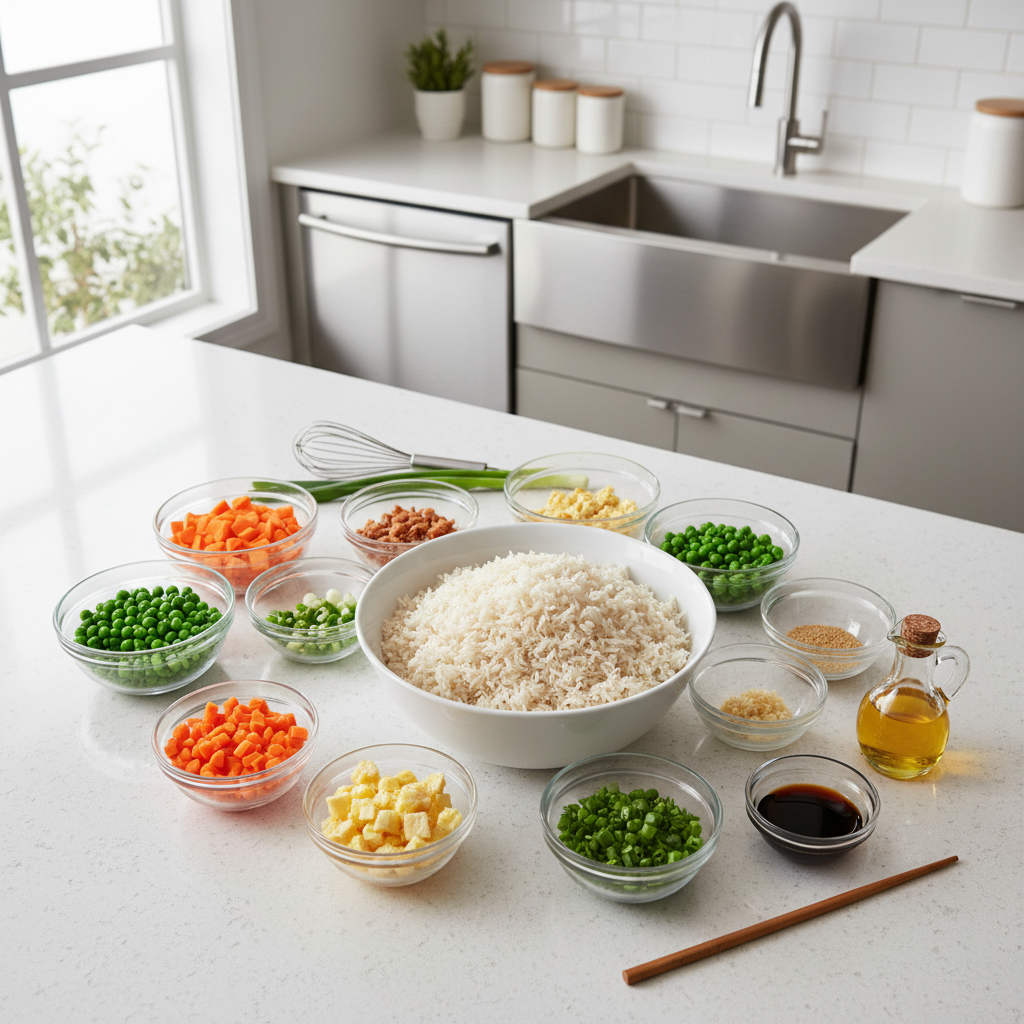
Your “Mise en Place” Checklist (Do This Before the Burner Turns On)
Fried rice punishes multitasking, so put everything in arm’s reach first. This is the part that makes the cooking feel easy.
- Rice portioned and de-clumped
- Eggs beaten with a pinch of salt
- Veg chopped small and even (they cook fast)
- Protein cooked or thin-sliced (raw chicken cubes take too long for typical fried rice flow)
- Sauce mixed in a small bowl
- Scallions or herbs separated, whites for cooking, greens for finishing
The Simple Method: A Reliable Order of Operations
This is the flow that works in most home kitchens, even without a restaurant burner. Once you internalize the order, you can swap ingredients freely.
Step-by-step
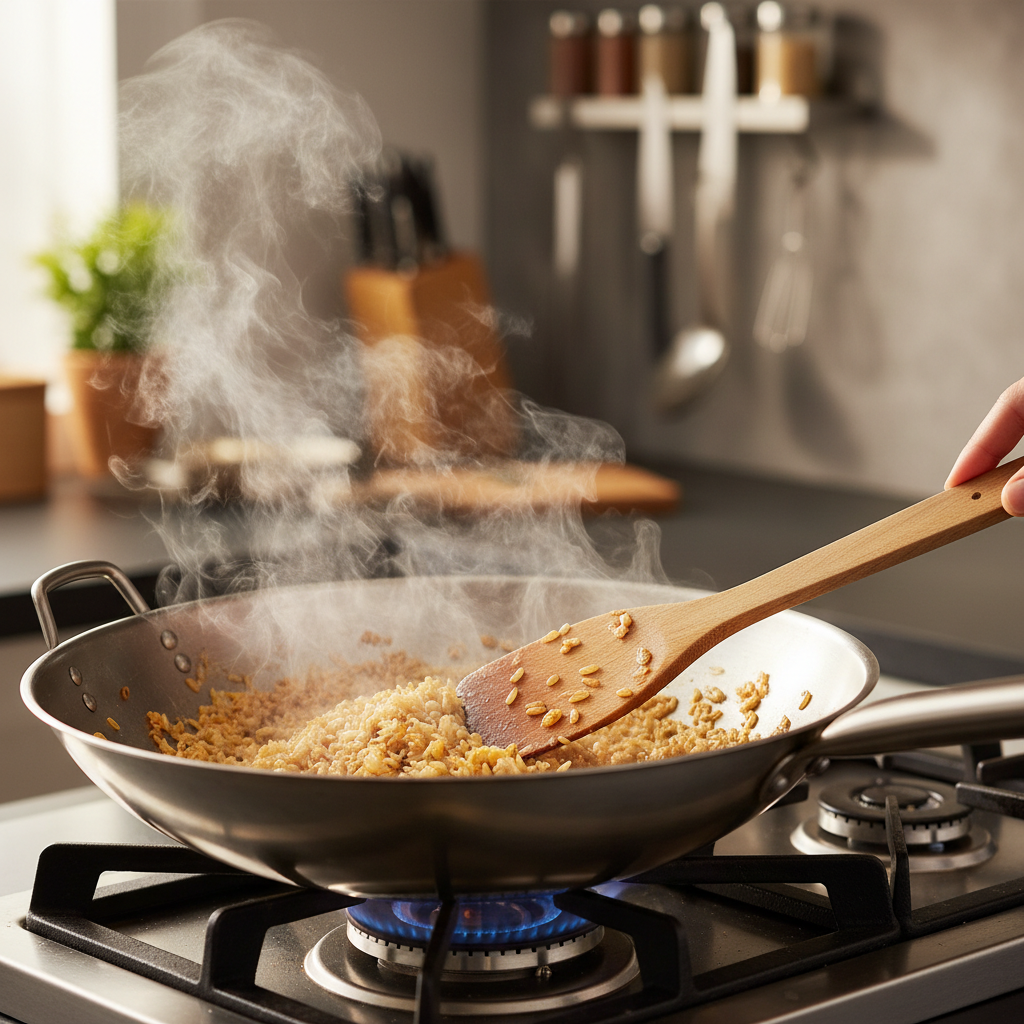
- Preheat pan: medium-high to high, give it time, a drop of water should sizzle and evaporate quickly.
- Eggs first: add oil, scramble quickly, remove to a plate. This prevents overcooked egg bits later.
- Aromatics and firm veg: garlic, onion, carrots, stir fast, 30–90 seconds depending on size.
- Rice goes in, then spread: press into a thin layer for 20–40 seconds, then toss. Repeat once or twice for light browning.
- Add sauce at the edges: drizzle around the hot pan, not directly onto the rice mound, it reduces slightly and smells better.
- Return egg + quick add-ins: peas, cooked protein, scallion whites, toss until hot.
- Finish: scallion greens, a few drops of toasted sesame oil, taste and adjust.
That “sauce at the edges” move looks fussy, but it’s one of the easiest ways to avoid wet, gray rice.
Flavor Building Without Over-Soying: Use This Table
Most people overshoot soy sauce to compensate for bland rice, then the dish tastes one-note. A better approach is layering salty, savory, and aromatic notes in small amounts.
| Goal | What to add | When to add it |
|---|---|---|
| Deeper savory flavor | Oyster sauce, hoisin, or a small spoon of miso (diluted) | Mix into sauce bowl |
| Classic “takeout” aroma | Toasted sesame oil (a few drops) | At the end, off heat |
| More umami without extra salt | Mushrooms, scallions, a pinch of MSG (optional) | Mushrooms early, scallions late |
| Little tang and brightness | Rice vinegar or lime | Very end, tiny amount |
| Spicy kick | Sambal, chili crisp, sriracha | Mix into sauce or finish on top |
Key point: keep your sauce small-volume. You can always add a splash more, you can’t un-sog the rice.
Fast Self-Diagnosis: Why Your Fried Rice Isn’t Working Yet
If your last attempt disappointed you, find the symptom that matches and fix only that next time. Changing five things at once makes it hard to learn.
- It’s mushy: rice too fresh, pan overcrowded, sauce added too soon.
- It’s dry and bland: not enough fat, not enough salt, or no aromatic base.
- It’s salty: using only soy sauce for flavor, or adding more after it reduces.
- Veg is limp: heat too low, veg cut too large, cooked too long.
- Egg disappears: stirred in too early and broke apart, or overcooked in-pan.
When in doubt, reduce batch size. In a normal 10–12 inch skillet, 2 to 3 cups of cooked rice is often the comfort zone.
Easy Variations (So It Doesn’t Feel Like Leftovers)
Once you know how to make fried rice at home, the real advantage is flexibility, this is how you turn “random fridge stuff” into dinner without it tasting random.
3 combinations that usually work
- Chicken + broccoli: use bite-size cooked chicken, add broccoli small and early so it softens.
- Shrimp + peas: shrimp cooks fast, add near the end to avoid rubbery texture.
- Veg-heavy + egg: double the aromatics, add edamame or mushrooms for heft.
Quick sauce baseline: soy sauce + a pinch of sugar + black pepper, then choose one upgrade from the table above.
Practical Tips That Save a Weeknight Dinner
These are the small adjustments that make the process calmer and the results more consistent.
- Use enough oil to coat the grains: not greasy, just enough to prevent sticking and help browning.
- Let rice sit: a few seconds of contact with the pan creates flavor, constant stirring often cools the skillet.
- Season in layers: a little salt in eggs, a little in veg, sauce to finish.
- Keep frozen veg on hand: peas and corn are forgiving, add late so they don’t dump water.
- Taste before “fixing”: if it’s flat, try pepper, vinegar, scallion greens, or sesame oil before adding more soy.
According to the FDA, basic kitchen hygiene like handwashing and preventing cross-contamination reduces foodborne illness risk; if you’re cooking for someone with higher health risk, extra caution is sensible and professional advice can be appropriate.
Conclusion: Make It Easy by Controlling Moisture and Timing
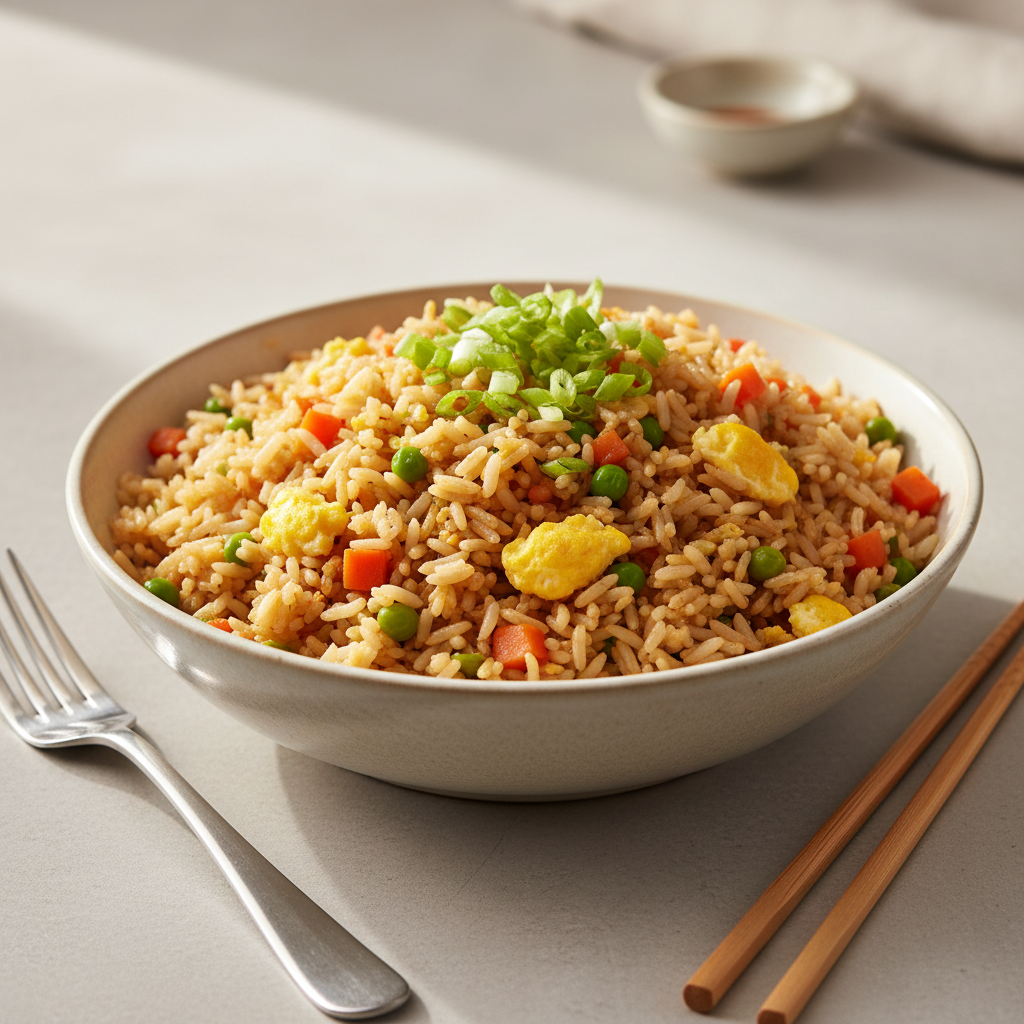
How to make fried rice at home comes down to two habits, start with dry-ish rice and cook in an order that protects heat, eggs first, rice gets a chance to toast, sauce goes in late.
Pick one small upgrade for your next batch, either cool the rice properly, or cut the batch size, or mix your sauce ahead of time, those single changes tend to show results fast. When you’re ready, build a simple “house version” you can repeat without measuring much.