
Omelette recipes feel simple until you want that tall, fluffy, diner-style lift and your eggs turn thin, rubbery, or oddly wet in the middle.
The good news is you usually don’t need special tools or fancy ingredients, you need the right heat, the right amount of air in the eggs, and a folding method that matches your pan.
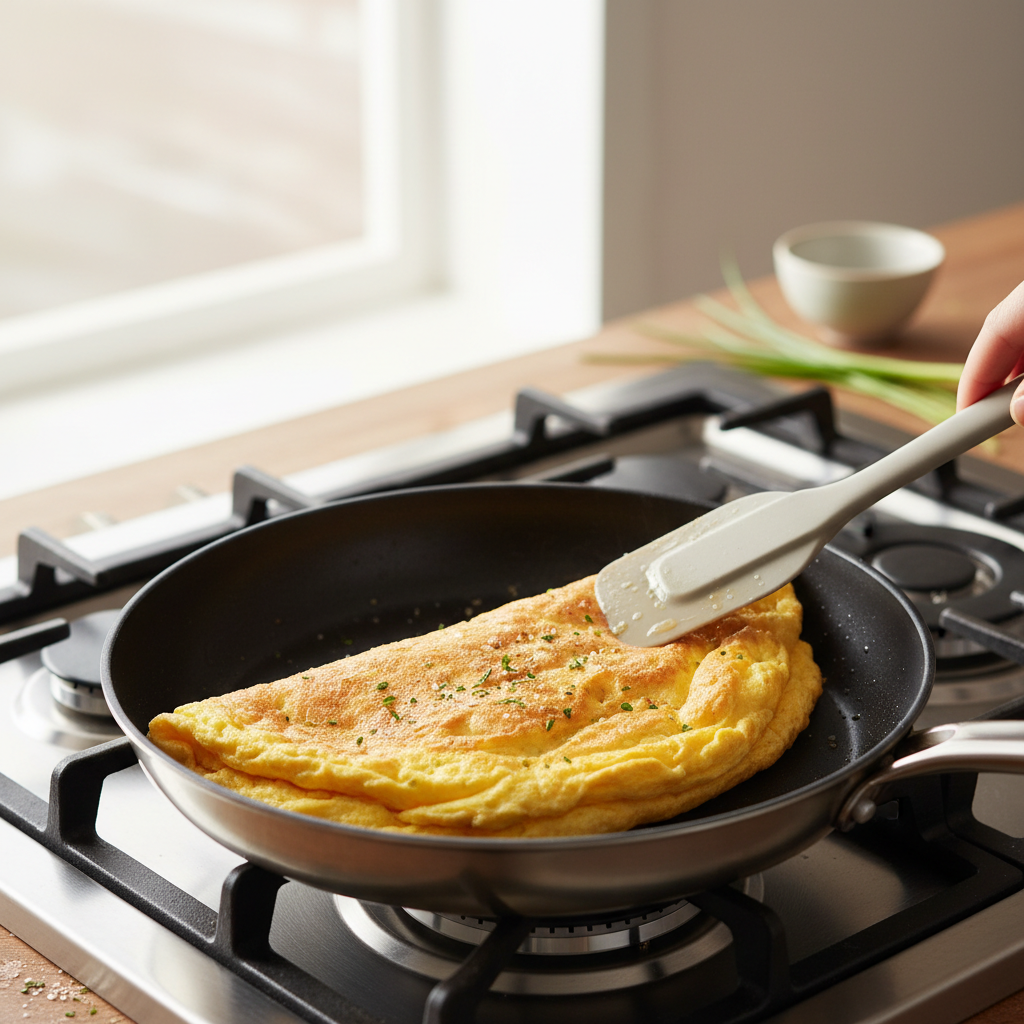
What trips most people up is trying to “cook it faster” by turning up the burner, that’s when the outside sets hard before the inside has a chance to steam and puff. This guide keeps it practical: a quick technique, a few easy variations, and a troubleshooting list you can use the next time breakfast goes sideways.
What actually makes an omelette fluffy (and what doesn’t)
Fluffiness comes from air plus gentle heat. You whip a bit of air into the eggs, then you cook them in a way that traps steam and keeps the curds tender.
- Air in the eggs: Whisking breaks up the whites and incorporates air bubbles. No need for a mixer, but you do want the eggs to look evenly blended and slightly frothy.
- Moderate heat: Too hot and the proteins tighten quickly, squeezing out moisture. Medium or medium-low is where the “puff” usually happens.
- Steam + a brief cover: A lid for 30–60 seconds can finish the top gently, so you avoid browning while the center sets.
- Fillings in the right amount: Overfilling weighs the eggs down and encourages tearing.
According to USDA Food Safety and Inspection Service (FSIS), eggs should be cooked until firm, and egg dishes should reach a safe internal temperature; if you’re cooking for someone pregnant, older adults, or anyone immunocompromised, it’s worth being extra cautious and consulting a professional for personal guidance.
A quick self-check: which omelette problem do you have?
Before switching ingredients, match your symptom to the likely cause. This saves a lot of trial-and-error.
| What you see | What’s usually happening | Fast fix next time |
|---|---|---|
| Flat, thin omelette | Not enough whisking, pan too large, heat too high | Whisk 20–30 seconds, use 8–10 in skillet for 2–3 eggs, lower heat |
| Rubbery or tough | Overcooked, too much stirring, high heat | Cook on medium-low, stop as soon as just set, finish with lid |
| Browned bottom, wet top | Heat too high, no steam finish | Lower burner, add lid for 30–60 seconds |
| Tears when folding | Too dry, overfilled, eggs set too long | Add less filling, fold earlier, let carryover heat finish |
| Watery filling | Raw veggies, high-moisture add-ins | Pre-cook mushrooms/spinach, drain salsa, use less cheese |
The base method: easy fluffy omelette in 10 minutes
This is the “weekday reliable” approach, it works with most omelette recipes because it keeps the eggs tender and gives you room to adjust.
Ingredients (1 omelette)
- 2–3 large eggs
- 1–2 tbsp milk or water (optional, small amount)
- Salt and black pepper
- 1 tsp butter or 1–2 tsp oil
- Fillings: 1/4–1/3 cup total (cheese, cooked veg, ham, herbs)
Steps
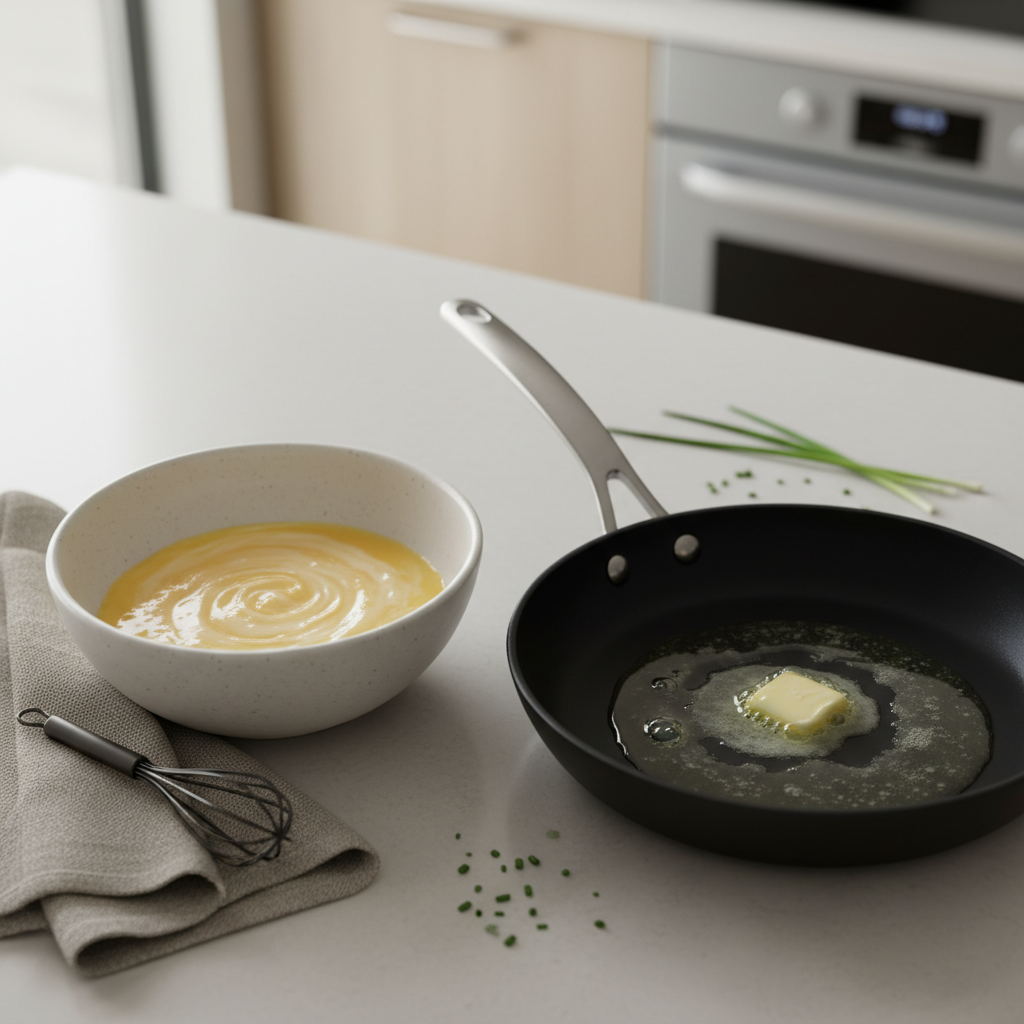
- Whisk like you mean it: Beat eggs with a pinch of salt until fully uniform and lightly foamy, about 20–30 seconds.
- Warm the pan, then add fat: Heat an 8–10 inch nonstick skillet on medium. Add butter, let it foam but not brown.
- Pour and loosen the edges: Add eggs, then use a silicone spatula to gently pull set egg from the edges toward the center a few times. Tilt pan to let raw egg flow into gaps.
- Stop stirring early: When the top still looks slightly wet but not liquid, spread fillings on one half.
- Steam-finish: Cover with a lid for 30–60 seconds, just until the top looks softly set.
- Fold and slide: Fold over, turn off heat, and let it sit 30 seconds before plating. Carryover heat finishes the center without drying the outside.
Key point: If you’re chasing fluff, don’t wait for the eggs to look “dry” in the pan, that’s typically one minute too late.
3 easy fluffy variations (same technique, different vibe)
Once the base is consistent, omelette recipes become more about managing moisture and timing than “finding the perfect formula.”
1) Cheddar + chives (classic, forgiving)
- Filling: sharp cheddar, chopped chives, black pepper
- Why it works: low moisture, melts fast, doesn’t weigh eggs down
2) Mushroom + spinach (tasty, but prep matters)
- Cook mushrooms until browned, then add spinach just to wilt, season lightly
- Let filling cool 1–2 minutes before adding, steam from hot filling can make the eggs weep
3) Ham + Swiss + Dijon (brunch energy)
- Use thin-sliced ham, tear into small pieces
- Optional: 1/4 tsp Dijon whisked into eggs for a gentle tang
Tools and ingredient choices that actually matter
You can make great omelettes with basic gear, but a few choices remove friction.
- Pan size: 8-inch for 2 eggs, 10-inch for 3 eggs. Too wide spreads the eggs thin, and you lose lift.
- Nonstick vs stainless: Nonstick gives the easiest fold. Stainless can work, but sticking often forces overcooking.
- Butter vs oil: Butter tastes better and helps browning control, oil handles higher heat. Many people do a mix.
- Milk/water: Small amounts can loosen texture. Too much can lead to weeping. If you’re unsure, skip it and focus on heat control.
According to American Egg Board, eggs are a nutrient-dense option and are commonly used in quick meals; for individual dietary needs like cholesterol management, it’s smart to check with a registered dietitian or clinician.
Common mistakes (and the small fixes that feel unfairly effective)
Most “bad omelette days” come from a couple predictable habits.
- Cranking heat to save time: You often lose more time dealing with torn folds and burnt bits. Medium or medium-low stays safer.
- Overfilling: Keep fillings to about 1/4–1/3 cup. If you want more, serve extra on the side.
- Adding raw watery veggies: Tomatoes, mushrooms, spinach, zucchini should be cooked and drained. Moisture turns the center gummy.
- Salting too early, too heavily: A small pinch before whisking is fine. Heavy salt can draw out moisture and make eggs look “wet.”
- Waiting for the top to look fully dry: That’s how you get toughness. Fold while still glossy, then let residual heat finish.
Practical meal-prep and serving tips (without turning it into a project)
Omelettes are fastest when you treat fillings like “mini leftovers.” Do a little prep once, then assemble all week.
- Batch-cook fillings: Sauté onions/peppers/mushrooms, cool, then refrigerate 3–4 days in a sealed container.
- Grate cheese ahead: Pre-shredded works, but freshly grated melts more smoothly. Either is fine on busy mornings.
- Portion your add-ins: Small containers with 1/4 cup filling stop accidental overstuffing.
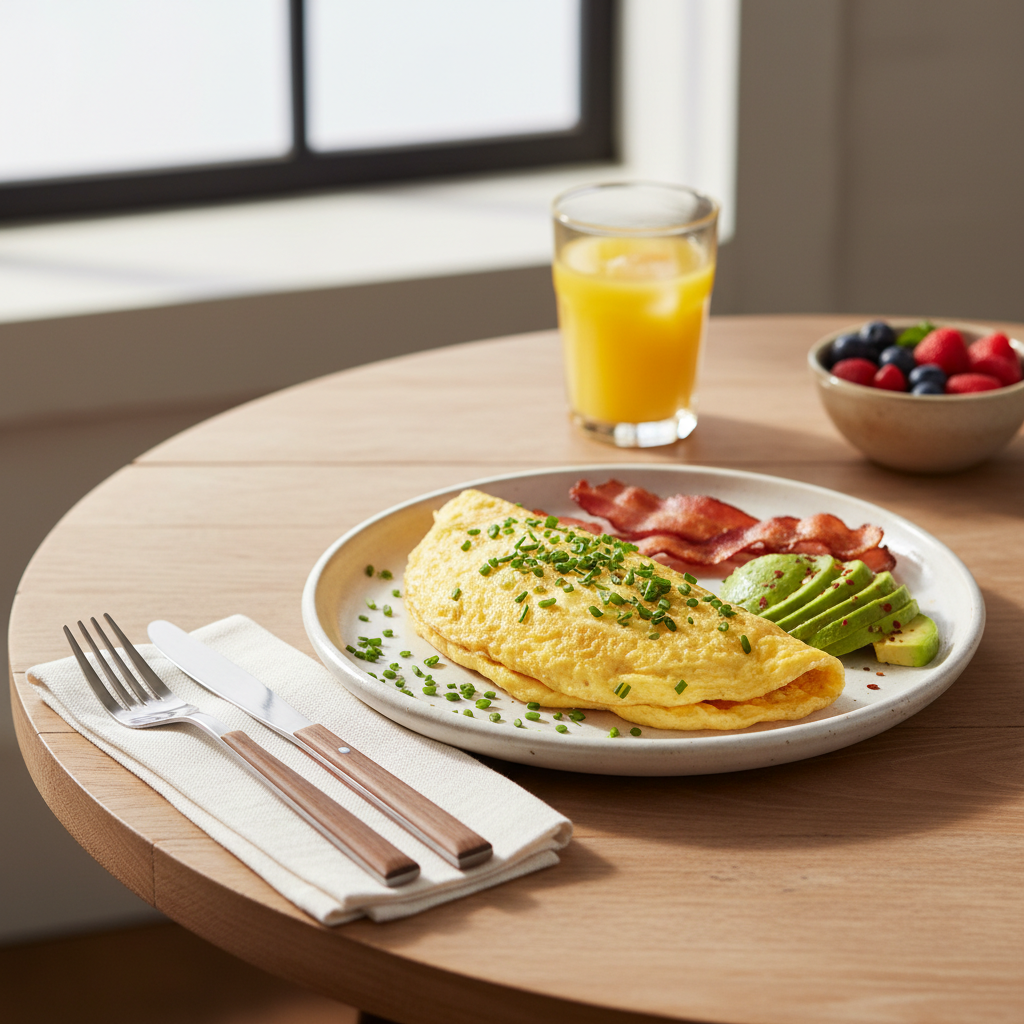
- Serving idea: Pair with fruit, toast, or a simple salad if it’s lunch. Keeps it balanced without fuss.
Quick takeaway list: Whisk until foamy, medium heat, stop stirring early, use a lid briefly, fold before dry, don’t overload fillings.
When it’s worth getting extra help
If eggs regularly trigger digestive symptoms, allergies, or you’re cooking for someone with higher food safety risk, it’s sensible to ask a registered dietitian or clinician for advice that fits the person, not just the recipe. And if you’re unsure about safe handling, checking USDA guidance can keep things simple and low-stress.
Conclusion
Fluffy omelettes aren’t a mystery ingredient, they’re a timing and heat problem dressed up as a recipe problem. Nail the base method, keep fillings modest and not watery, and you’ll find most omelette recipes start working the way you expected.
Next time you cook, try just two changes: drop the burner one notch, and fold while the top still looks a little glossy. If you want, pick one variation above and repeat it three mornings in a row, repetition is what makes it feel effortless.
FAQ
What’s the easiest way to make omelettes fluffy without separating eggs?
Whisk until the mixture turns uniform and lightly foamy, then cook on moderate heat and use a short covered “steam finish.” You’ll get lift without extra bowls.
Should I add milk or water to omelette recipes?
Either can work in small amounts, but it’s not required. If your omelette tends to weep or feel wet, skip added liquid and focus on gentler heat and earlier folding.
Why does my omelette turn brown before it sets?
The pan is usually too hot or too dry. Lower heat, add a little more butter, and cover briefly so the top sets from steam instead of direct high heat.
How do I keep vegetables from making the omelette watery?
Cook vegetables first and let moisture evaporate, then cool slightly. For spinach, squeeze or press excess liquid after wilting, it makes a bigger difference than people expect.
What pan size is best for a fluffy omelette?
Many home cooks get better height using an 8-inch skillet for two eggs and a 10-inch for three. If the eggs spread too thin, they won’t puff much.
Can I make a fluffy omelette with egg whites only?
You can, but texture tends to be drier and it overcooks fast. Lower the heat, consider a lid finish, and use a bit of fat in the pan to keep it tender.
How do I know when the omelette is safe to eat?
In many cases, you’ll want the eggs set and not runny. If you’re cooking for someone at higher risk, follow USDA food safety guidance and consider using a thermometer for egg dishes.
If you’re building a small rotation of omelette recipes for busy mornings, start with one base technique and two fillings you actually keep on hand, it’s the most “real life” way to make fluffy omelettes feel automatic instead of a weekend-only win.